Pangpema (North Base Camp) Experience
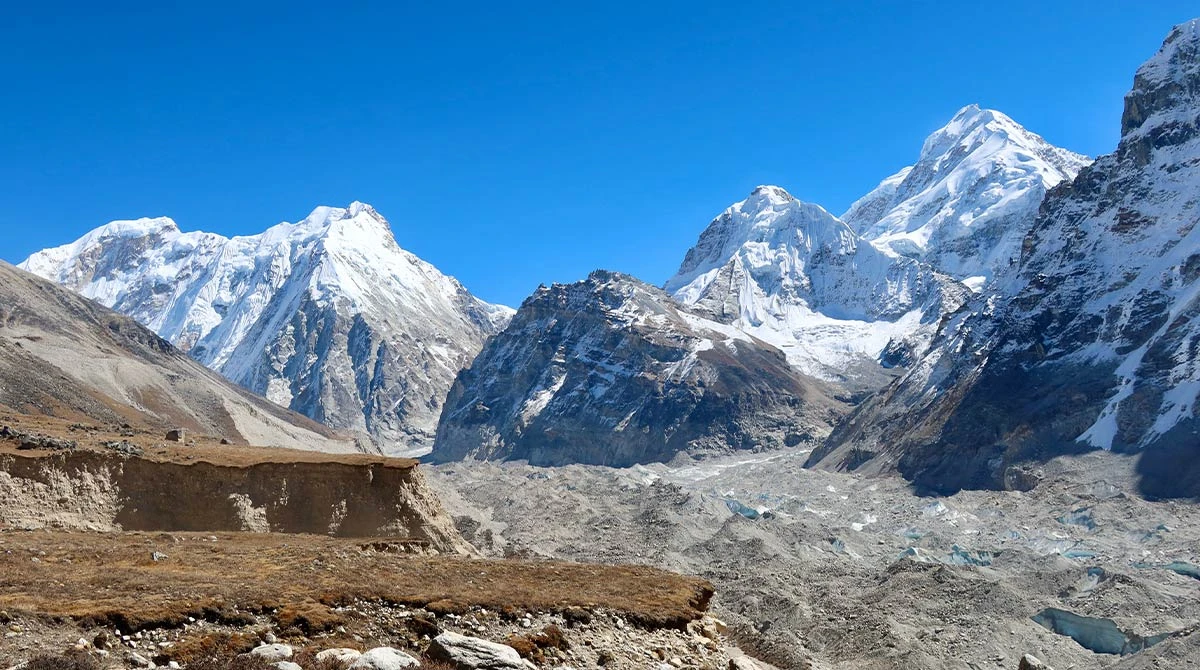
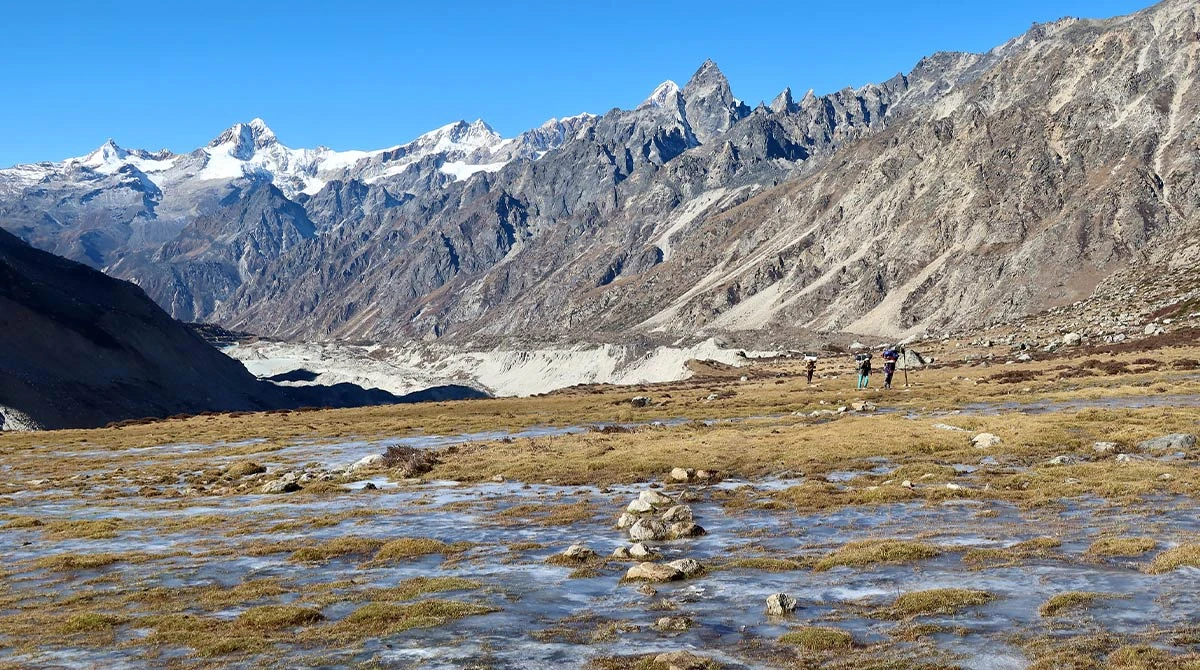
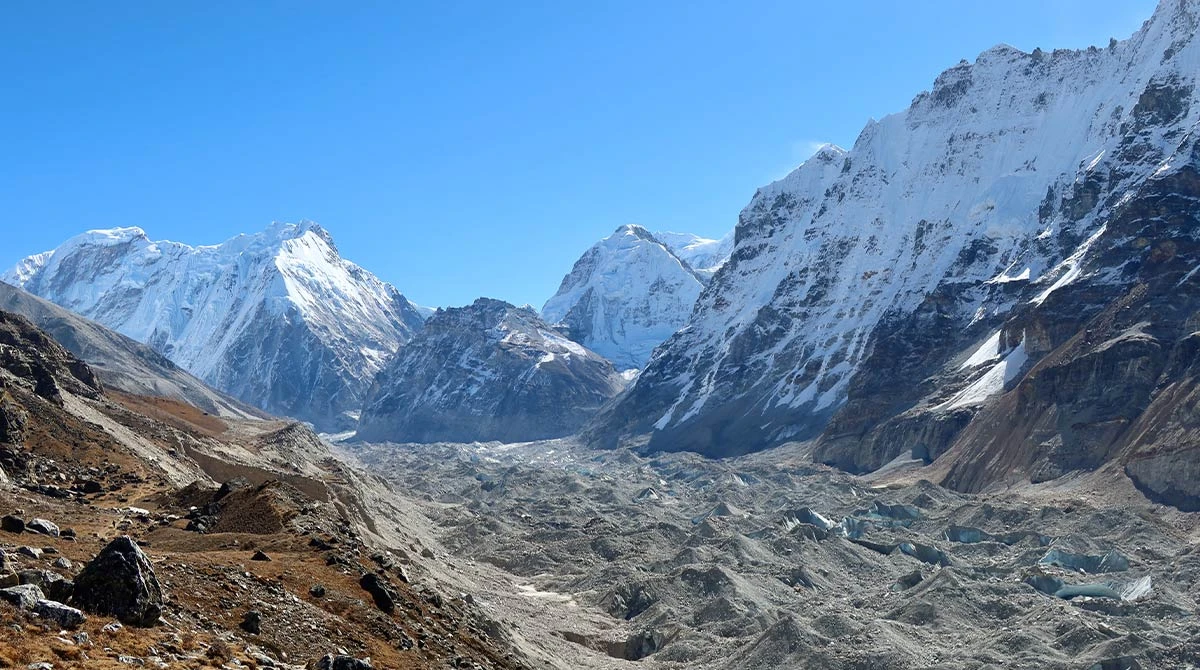
One of the defining moments of this trek is the arrival at Pangpema, the North Base Camp of Kanchenjunga. The trip to the base of the glacier and back from Lhonak takes 6-8 hours over rough high-altitude terrain along the sides of the Kanchenjunga Glacier. As you approach Pangpema, it's impossible to ignore the sheer immensity of Kanchenjunga's north face, which rises dramatically above the glacial valley. At 5,100m, this is one of the highest points on the trek and the thin air makes the last stretch feel harder than the distance would suggest.
Unlike the more famous base camps in Nepal, Pangpema sees very few visitors, giving the experience a genuine sense of remoteness and achievement. Being here, in the presence of the world's third-highest mountain and its neighboring peaks, is a moment that many trekkers describe as one of the most powerful of the whole journey. The group takes photos and enjoys the views before heading back the way they came to sleep in Lhonak for the night.
Oktang (South Base Camp) Experience
The trek to Oktang, the South Base Camp of Kanchenjunga, offers a very different perspective of the mountain than the view from Pangpema. From Ramche, the trek to this section, which follows the southern approach to the Kanchenjunga massif, takes 4 to 5 hours for a round trip. This trek is a different kind of landscape than the North Base Camp route. We can see Kabru and Rathong peaks besides Kanchenjunga itself. This part of the trek has a special feature, namely the contrast it offers.
After seeing the north face of the mountain at Pangpema, reaching Oktang provides a rare opportunity to see Kanchenjunga from two very different angles in full. Few trekking routes in Nepal provide such a dual base-camp experience. The day is slightly less demanding than the previous day, because the round-trip distance is shorter (than Pangpema), but the high altitude means that a steady pace and adequate acclimatization built up over the previous days are still required.
Food on the Trek
The food on the Kanchenjunga Base Camp trek shows just how remote this region is, compared to more popular routes like Everest or Annapurna. Teahouses and lodges serve simple, hearty meals along the way, with dal bhat being the most common and reliable choice throughout the trek. You'll also find noodles, soups, potatoes, and basic bread dishes at most stops.
One pleasant surprise on this route is Ghunsa, where the Dzonga Family House offers a genuine bakery with fresh bread and even coffee, a rare treat for trekkers deep into the mountains. As you move higher toward Khambachen, Lhonak, and beyond, menu options become more limited, so carrying personal snacks like energy bars or dried fruit is a good idea. Hot drinks like tea, coffee, and hot lemon are typically included with meals.
Given how remote this trek is, especially on the Selele Pass and Oktang sections, supplies can be less predictable, so it's wise to keep expectations simple and flexible when it comes to food choices in the most isolated stretches.
Accommodation
Accommodation on this trek varies significantly depending on which section of the journey you're in, reflecting the remote and developing nature of the Kanchenjunga region. In Kathmandu, you'll stay in a comfortable hotel before and after the trek. Accommodation is basic, teahouse-style, with simple rooms and shared bathrooms, for the first trekking days through Sekathum, Amjilosa and Gyabla.
One of the highlights is Ghunsa, where you will stay at the Dzonga Family House, a well-known lodge with an attached bathroom, bakery and a noticeably higher level of comfort than you might expect in such a remote village. Another excellent option on the trail is the Kanchenjunga White House Hotel in Khambachen. As the trek moves into the more remote terrain around Lhonak, Selele and the base camp areas, accommodation becomes more basic with simple guesthouses or occasional tented setups.
There is no electricity all the way through the trek, except in Sekathum and Ghunsa, where there is micro-hydro power. Most of the other stops are solar powered, which can sometimes fail (depending on the weather) so it is highly recommended to bring your own power bank.
Best Time for the Trek
The season you choose will have a giant impact on your experience on this remote Kanchenjunga Base Camp trek. The best time to go is usually in the autumn (late September to November) when the weather is settled, the mountain views are clear and the temperatures are comfortable for trekking.
Spring (March-May) is another excellent option, with the added bonus of blooming rhododendron forests in the lower forested sections of the trail. In both seasons, trekkers can safely reach the two base camps and cross the Selele Pass under optimal conditions. The winter months of December to February are harsh, especially in higher altitude locations like Pangpema and Selele High Camp, and parts of the trail may be difficult or dangerous to walk due to snow.
Only experienced trekkers who are well prepared should attempt this trek this season. Avoid the monsoon season between June and September as heavy rainfall, leech-infested lower trails and poor visibility make this one of the least suitable times for a trek through this remote and rugged region.
Packing & Gear List
General Trekking Gear
- Comfortable, well-broken-in trekking boots, ideally waterproof
- Daypack, around 35–40 liters, with a rain cover
- Four-season sleeping bag, suitable for high-altitude nights
- Sleeping bag liner
- Trekking poles
- Duffel bag for porter-carried luggage
Upper Body
- Sun hat or cap
- Warm beanie
- Headlamp with extra batteries
- Sunglasses with UV protection
Torso
- Base layers, light and heavy weight
- Short and long-sleeve technical shirts
- Waterproof, windproof jacket
- Fleece jacket or pullover
- Down jacket for higher-altitude sections
Lower Body
- Base layer bottoms
- Hiking pants
- Comfortable pants for evenings at teahouses
- Waterproof, windproof shell pants
- Hands
- Liner gloves
- Insulated outer gloves for higher elevations
Feet
- Wool or technical hiking socks
- Waterproof trekking boots
- Gaiters for muddy or snowy sections
- Casual shoes for lower villages and rest days
Electronics & Power
- Power bank, given limited electricity along the route
- Extra batteries for headlamps and cameras
- Universal travel adapter
Other Essentials
- Passport and other passport photos
- Water bottle and purification tablets (reusable)
- Basic Medications & Personal First Aid Kit
- Lip balm & Sunscreen (high spf)
- Quick-dry towel and toiletries
- Earplugs
- Energy bars or snacks for long trekking days
Travel Insurance
This trek is a must for travel insurance, as it is remote and at high altitudes, with the trek reaching over 5,100 meters at Pangpema. The closest town or medical facility is a long way from this area, so your policy must include full high-altitude emergency evacuation, ideally with helicopter rescue from remote areas like Ghunsa, Lhonak or the base camps themselves.
Some sections of this route are remote, especially around the Selele Pass and the Oktang areas, so evacuation logistics are more complex and take longer than they do on more popular trekking routes, making proper coverage even more essential. Your policy should also cover trip cancelation, flight delays to and from Bhadrapur, lost luggage and general medical expenses.
You should buy your insurance well before you leave and make sure it says it covers remote area trekking, because some normal policies will exclude areas that are considered restricted or less accessible. This coverage is not included in your package price, but good travel insurance is one of the most important preparations for a trek this far off the beaten path.
Bhadrapur Flight & Jeep Drive Information
Getting to the start of this trek is a combination of flying and driving, unlike most other trekking routes in Nepal. Our journey begins with a quick 45-minute flight from Kathmandu to Bhadrapur. Bhadrapur is a town in eastern Nepal, near the Indian border. After several days of jeep travel, we reach Sekathum, where the trek begins. From Bhadrapur you continue by jeep and it will be a long 5- to 6-hour drive to Taplejung.
Road conditions can affect these jeep drives, particularly during or after monsoon season when landslides or muddy roads are more likely in this part of eastern Nepal. So it’s worth building some flexibility into your schedule, particularly around the Bhadrapur flight and the long drives at either end of the trek.
On the way back, the trip follows this pattern in reverse, with an 8- to 9-hour jeep ride from Taplejung to Bhadrapur and an evening flight back to Kathmandu. Because of the length and uncertainty of these sections of road, we recommend making sure you have at least one buffer day in your overall schedule, especially later in the trip, so you don’t run the risk of missing your international departure flight from Kathmandu.
Permits
The Kanchenjunga Base Camp trek passes through a restricted and protected conservation area, so it requires several permits. We handle all the paperwork for you and the cost is included in your package.
- Kanchenjunga Conservation Area Permit (KCAP)—for trekking through this protected area
- Restricted Area Permit – The Kanchenjunga region is a restricted trekking area, so a registered guide is required to visit it.
- TIMS Card (Trekkers’ Information Management System)—used to monitor trekkers for safety reasons
- Solo trekking is not allowed in this restricted area and trekkers need to trek in a group of a minimum of two persons.
- Two passport-sized photos are needed to process permits, so bring copies before your trip
Altitude Sickness
Altitude sickness is a real concern on this route as the trek reaches over 5,100m at Pangpema and there are many ascents and descents.
- Common symptoms include headache, dizziness, nausea, loss of appetite and fatigue, especially at altitudes above 4,000 m.
- The itinerary consists of a fixed acclimatization day at Ghunsa and a gradual ascent profile throughout the trek.
- To prevent altitude sickness, it is advisable to maintain a slow pace and stay adequately hydrated.
- Guides monitor the trekkers’ health throughout the trek—especially on the pushes to Pangpema and Oktang.
- Alcohol and sedatives should be avoided at high altitude, as both can worsen symptoms and interfere with early warning symptoms.
- Immediate descent is the best and often the only remedy once the symptoms become severe.
- The isolation of this region can mean that evacuation takes longer than on more popular trekking routes so early recognition of symptoms is of particular importance.
- We highly recommend that you buy a comprehensive travel insurance policy that includes high-altitude evacuation before you start your trek.
Travel Tips
Here are some practical tips to make your trek to Kanchenjunga Base Camp a success, especially given the fact that this area is so remote and undeveloped compared to other trekking regions of Nepal.
- Temperatures vary widely between the lower valleys and high mountain passes, so pack in layers, not one heavy item.
- This long 21-day itinerary will require you to break in your trekking boots well before the trip to prevent blisters.
- Do carry enough cash in Nepali rupees, as there are no ATM or Card Payment options once you leave Kathmandu and Bhadrapur.
- Bring a reliable power bank as only Sekathum and Ghunsa have micro-hydro electricity and most other stops are solar powered.
- Bring a reusable water bottle and purification tablets. In remote areas, bottled water becomes scarce and expensive.
- Buffer days should be allowed around the Bhadrapur flights and jeep drives, as road conditions may result in delays.
- This route is much less developed than Everest or the Annapurna trails, so expect more basic facilities and fewer amenities overall.
- This is a restricted area and you must by law have a minimum of two trekkers, so plan your group size accordingly before booking.
- The trek will be long so physical preparation is important. Work on building stamina and endurance long before you leave.