Mera Peak Climbing – 17 Days

Mera Peak Climbing – 17 Days
Duration17 Days
Trip GradeStrenuous
CountryNepal
Maximum Altitude6,476m
Group Size2-15
StartsKathmandu
EndsKathmandu
ActivitiesTrekking, Hiking, and Camping
Best TimeMarch to May and October to December

Climbing Mera Peak is one of the most rewarding high-altitude adventures in Nepal. It’s the highest trekking peak in the country at 6,461 m. This 17-day adventure leads you on remote trails in the Hinku Valley, away from the busy Everest routes. You will hike through pristine woodlands, silent villages and alpine terrain before summiting.

The trek begins with a flight to Lukla and then takes a less traveled route through Makalu Barun National Park. This trail is peaceful all the way through, unlike the busier trails in the Everest region. You will pass through villages like Panggom, Ningsow and Kothe. Each stop reveals a more profound insight into distant Sherpa and Rai communities. On the way up to Khare, acclimatization slowly takes place.

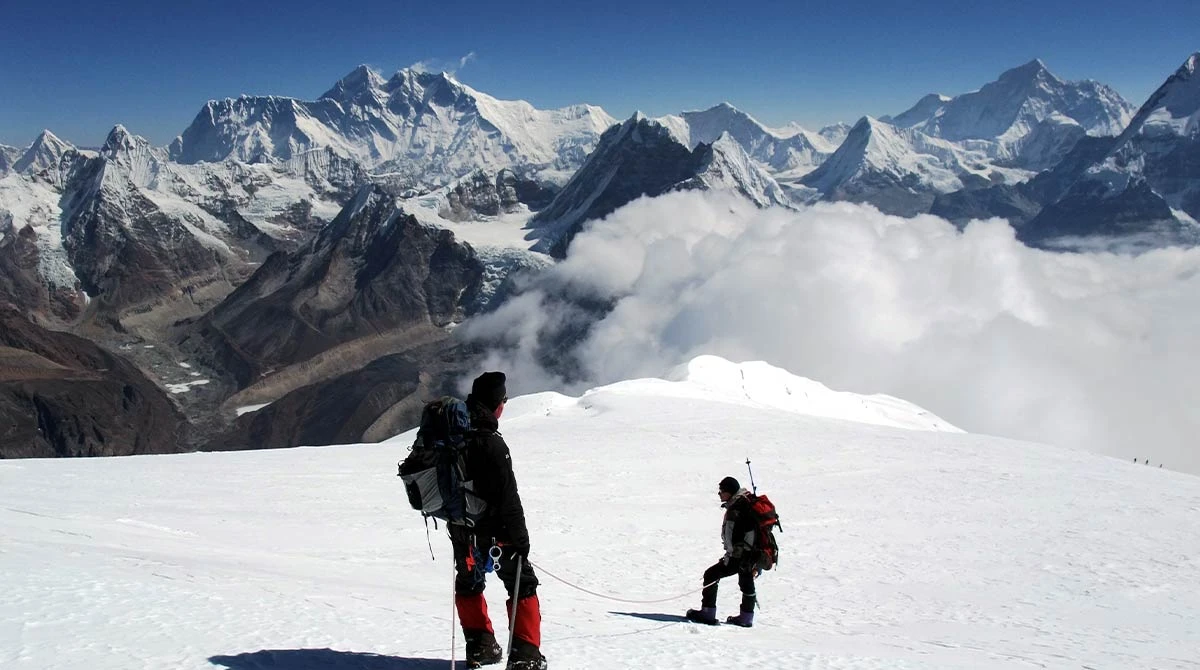
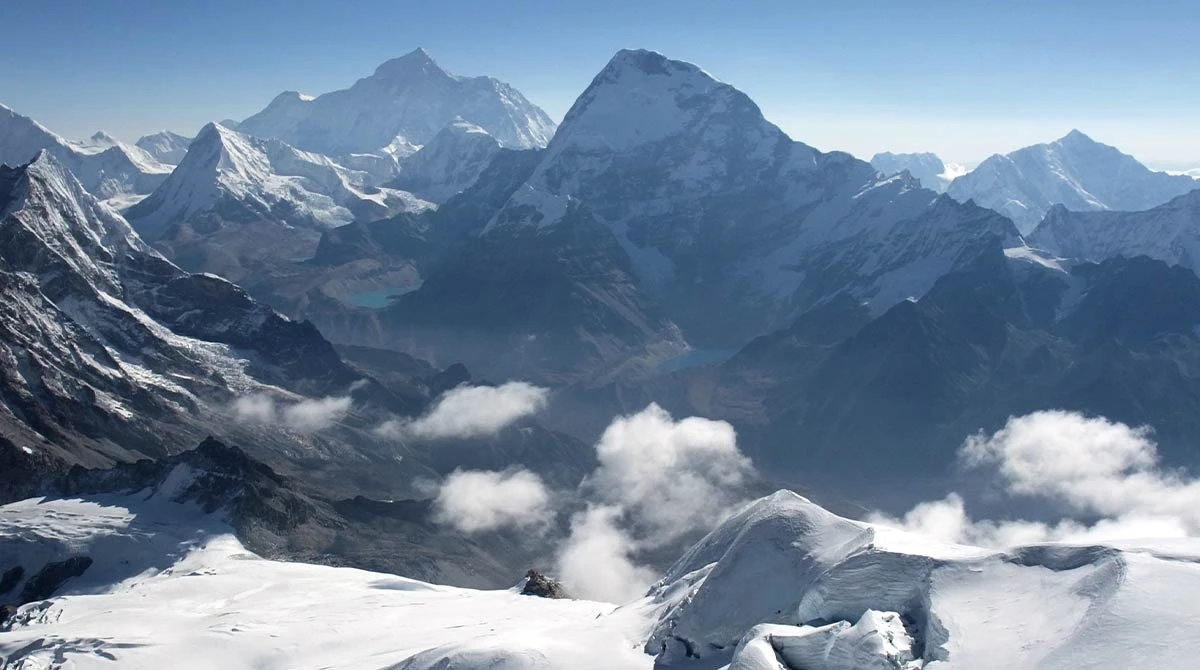
From Khare, the trail continues to Mera Base Camp and then to High Camp, which sits dramatically at 5,780 m. This is when the real climb begins. Climbers get up early on summit day and head for the top. The reward is huge. Looking down, you can see five of the world's highest peaks at a time: Everest (8848.86 m), Lhotse (8516 m), Makalu (8485 m), Kanchenjunga (8586 m) and Cho Oyu (8188 m).

This is a fantastic trek for trekkers looking for a serious challenge without needing technical climbing skills. Good fitness and a positive attitude are more important than experience in mountain climbing. Our guides take care of route-finding, safety and climbing training at High Camp. Ready to join the giants of the Himalayas? Contact our team today to confirm availability and begin planning your Mera Peak expedition.

Trip Highlights

  • Fly into Lukla, the gateway to the eastern Himalayan trails of Nepal.
  • Hike the less traveled, remote Hinku Valley.
  • Cross Makalu Barun National Park, a paradise of rich biodiversity and pristine forests
  • Experience real Sherpa and Rai culture in villages like Panggom and Ningsow.
  • Cross the scenic Mera La pass, the highlight of the high-altitude terrain of the trek.
  • Stay in Khare, the last settlement before Mera Base Camp.
  • Stay overnight at Mera High Camp at a dramatic 5,780 m.
  • Trek Mera Peak (6,461 m)—Highest trekking peak of Nepal
  • Enjoy summit views of 5 peaks that are above 8000m high: Kangchenjunga, Lhotse, Makalu, Cho Oyu, and Mount Everest.
  • Receive climbing training from experienced Sherpa guides before the summit push.
  • Traverse different terrains, including thick forests, glacial moraines and high alpine areas.

Mera Peak Climbing Route

The journey starts with a flight from Kathmandu to Lukla and then a short trek to Puiya. The trail immediately branches off the busy Everest routes and heads into the quieter Hinku Valley. The road climbs through wooded hills toward Panggom, a first glimpse of the area's remote and pristine character.

The Panggom trail continues through Ningsow and Chhatra Khola in Makalu Barun National Park. Along the way, this part is thickly wooded with rhododendron and pine trees. Here you have a chance to see wildlife and you can see local Rai and Sherpa settlements. As you approach Kothe, the terrain opens up and the valley starts to feel more alpine.

After Kothe, the trail climbs steadily through Thaknak and to Khare, the last real settlement before the high mountain terrain begins. Here the focus of the trek changes to acclimatization and climbing preparation. You proceed from Khare to Mera Base Camp, surrounded by glaciers and rocky moraines, and then ascend to High Camp at 5,780m.

The final part of the climb is the summit push. From High Camp, climbers start early for the summit of Mera Peak at 6461m. The route then descends back through Khare, Kothe and Thuli Kharka before joining the trail to Lukla for the flight back to Kathmandu.

Itinerary
Trip PlanExpand all

Arrive in Kathmandu, the busy capital of Nepal and begin your trek to the top of Mera Peak. Our representative will greet you upon your arrival at Tribhuvan International Airport and transfer you to the hotel in a private vehicle. Later your trekking guide will meet you for a pre-trip briefing where you will go over your itinerary, confirm your gear list and get answers to any last-minute questions. Free day to explore Kathmandu; before going into the mountains, make sure you have or get any missing hiking gear.

Max Altitude: 1400 m./4592 ft. Accommodation: 3 star hotel

Today is the true beginning of your journey into Hinku Valley. You will fly from Kathmandu to Lukla, a scenic mountain flight, landing at 2,800m. From here you will leave the busier Everest Base Camp trail and head off on the quieter Mera Peak route. The trek to Puiya is 3 to 4 hours through forested trails and small settlements. This straightforward first day is to get you into the walking rhythm before the trek becomes more demanding.

Max Altitude: 2,730 m / 8,956 ft Meals: Breakfast, Lunch, and DinnerAccommodation: Tea houseDuration: 3-4 hrs trek

The Puiya to Panggom trail is one of the longer and more difficult days of the early part of the trek. You will be for 6 to 7 hours in a very dense forest, or 7 hours in a very dense forest with some ups and downs. This trail is much less frequented than the main Everest trails, providing a genuine experience of remote Himalayan trekking. Panggom itself is a small village that offers a glimpse into local mountain life, largely untouched by mass tourism.

Max Altitude: 2,846 m / 9,337 ft Meals: Breakfast, Lunch, and DinnerAccommodation: Tea houseDuration: 6-7 hrs trek

Today’s trek to Ningsow is about 6 hours and takes you deeper into the Makalu Barun National Park region. You walk along a trail through rhododendron and pine forests, with the odd clearing where you can take in your surroundings. The area is home to a rich biodiversity and you might see local wildlife or bird species on your way. Ningsow is a small and peaceful village populated with the Rai and Sherpa ethnic groups. They continue their traditional way of life in this remote part of Nepal.

Max Altitude: 2,863 m / 9,393 ft Meals: Breakfast, Lunch, and DinnerAccommodation: Tea houseDuration: 5-6 hrs

Today’s trek to Chhatra Khola is one of the longest on the itinerary, taking 7 to 8 hours. The trail travels through forested terrain, with more and more open, mountainous areas the further you get from the lowlands. This is a physically demanding stretch, so pace yourself and stay hydrated. The reward is the ever-growing wilderness and remoteness of the Mera Peak trekking route.

Max Altitude: 3,122 m / 10,243 ft Meals: Breakfast, Lunch, and DinnerAccommodation: Tea houseDuration: 7-8 hrs trek

Today the trek to Kothe is about 6 to 7 hours and the terrain changes quite a lot. The forest thins as you climb; the views get more alpine. Kothe is located on the Hinku River and is an important stop for trekkers on their way to Mera Peak. There are a handful of teahouses in the village catering to climbers and it is here that the trek starts to become more about the climbing objective ahead.

Max Altitude: 3,691 m / 12,109 ft Meals: Breakfast, Lunch, and DinnerAccommodation: Tea houseDuration: 6-7 hrs trek

The walk to Thaknak is a shorter day than the previous legs, lasting about 3 to 4 hours. This allows your body precious time to acclimatize to the rising altitude. The trail continues up the Hinku Valley, with dramatic mountain views beginning to open up. Thaknak is a small settlement at a high altitude. The shorter walking distance today is by design and will help reduce the chances of altitude sickness as you approach 4,000 meters.

Max Altitude: 4,358 m / 14,297 ft Meals: Breakfast, Lunch, and DinnerAccommodation: Tea houseDuration: 3-4 hrs trek

Khare is a 2-3 hour walk, although the altitude gain will make it feel longer than the distance would suggest. Khare is the last real village before the high mountains of Mera Peak and plays an important role in your acclimatization and preparation for climbing. Most trekkers spend their time here resting, checking climbing gear and mentally preparing themselves for the days to come. The village has basic facilities and teahouses catering for Mera Peak.

Max Altitude: 5,045 m / 16,552 ft Meals: Breakfast, Lunch, and DinnerAccommodation: Tea houseDuration: 2-3 hrs trek

From Khare, the path continues for 2 to 3 hours to Mera Base Camp at 5,300 meters. The scenery is now more definitely glacial and rugged with rocky moraines and wide views of the surrounding peaks. Base Camp is a major turning point in the climb. It means you have entered serious high-altitude mountaineering territory. This is usually when your climbing guide will go over technical gear and give the group a briefing on summit strategy.

Max Altitude: 5,300 m / 17,388 ft Meals: Breakfast, Lunch, and DinnerAccommodation: Tented campDuration: 2-3 hrs trek

The trek from Base Camp to Mera High Camp is 4 to 5 hours and is one of the tougher days of the trip because the air is thinner at this altitude. High Camp is situated at the dramatic altitude of 5,780 meters and has panoramic views of the surrounding Himalayan range. The accommodation here is in a two-man tented setup, giving the trip a real mountaineering feel. This is your last stop before the summit push so an early dinner and rest are a must.

Max Altitude: 5,780 m / 18,958 ft Meals: Breakfast, Lunch, and DinnerAccommodation: Tented campDuration: 4-5 hrs trek

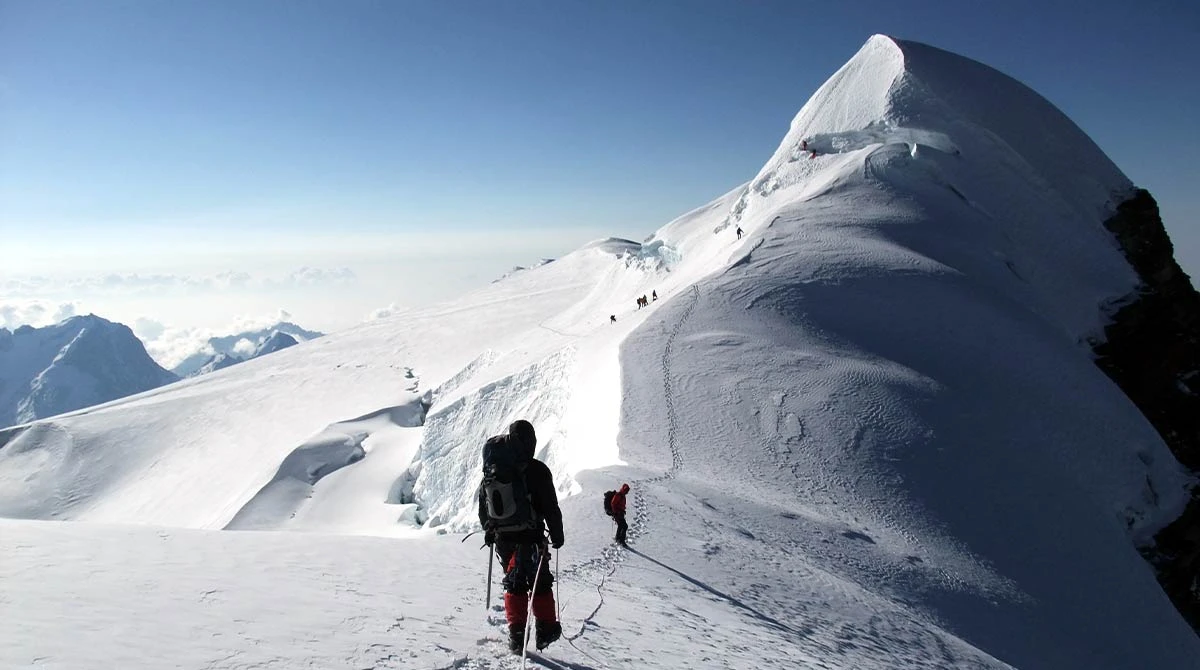
Summit day is the best and most difficult part of the whole trip. Climbers typically leave before dawn, using headlamps to light the dark route. With the help of your climbing Sherpa and fixed ropes on the steeper sections, you will make your way toward the summit of Mera Peak (6,461 meters), which is the highest trekking peak in Nepal. On a clear day you can see five of the world's 8,000m giants from the top: Everest, Lhotse, Makalu, Kanchenjunga and Cho Oyu. Enjoy the views and then the group descends all the way back to Khare. This is a long 8- to 9-hour day.

Max Altitude: 6,461 m / 21,194 ft Meals: Breakfast, Lunch, and DinnerAccommodation: Tea houseDuration: 8-9 hrs climb

This buffer day is built into the itinerary in case of inclement weather, delays, or if additional time is needed for the summit attempt. If everything goes as planned, this day can be used for rest and recovery in Khare, or it can be applied elsewhere in the itinerary if needed. It adds important flexibility to a trip where mountain weather can be unpredictable.

Meals: Breakfast, Lunch, and DinnerAccommodation: Tea house

With the summit behind you, the trek back down begins. The walk from Khare to Kothe takes around 5 hours and is much easier now that the climbing objective is behind you. The descent trail provides a different perspective of the alpine and forested landscapes, often with better visibility than the ascent.

Max Altitude: 3,600 m / 11,808 ft Meals: Breakfast, Lunch, and DinnerAccommodation: Tea houseDuration: 5 hrs trek

Today, the hike to Thuli Kharka takes six hours and goes down through Hinku valley. Since the last few days, the trail has been going through rocky, glacial land. Now, it's going through wooded land again. This is one of the last full days of trekking before getting to Lukla, and many people use it to think about the climb.

Max Altitude: 4,300 m / 14,107 ft Meals: Breakfast, Lunch, and DinnerAccommodation: Tea houseDuration: 6 hrs trek

The final day of the trek is a walk back from Thuli Kharka to Lukla of about 6 to 7 hours. This is the conclusion of the walking part of your Mera Peak trek. A wonderful chance to enjoy your last night in the mountains and celebrate a successful ascent with your guide and crew. Time to prepare for the flight back to Kathmandu the next day.

Max Altitude: 2,860 m / 9,383 ft Meals: Breakfast, Lunch, and DinnerAccommodation: Tea houseDuration: 6-7 hrs trek

The trekking and climbing part of your trip finishes and you will fly back to Kathmandu from Lukla on a short flight. Arrive at your hotel and enjoy the rest of the day at leisure. This is a good time to relax and take a refreshing shower and look around Kathmandu a little before you leave.

Max Altitude: 1,400 m / 4,593 ft. Meals: Breakfast, Lunch, and DinnerAccommodation: 3 star hotel

Your Mera Peak climbing journey concludes today. A representative will transfer you to Tribhuvan International Airport in time for your international flight home.

Meals: Breakfast
Cost Details
Includes
  • Kathmandu airport transfer and drop-off service, depending on your arrival and departure date and time
  • An English-speaking registered trekking guide for the whole trek
  • Khare to Mera Peak summit and back to Khare Professional Sherpa climbing guide
  • Full board meals during the trek, including breakfast, lunch and dinner
  • Lodge accommodation on the trek
  • Mera Peak Base Camp – two-person accommodation in tents.
  • Climbing equipment for groups: main rope, ice ax, snow bar, crampon, ascender and descender
  • Tented equipment for a one-night camping stay at Mera High Camp
  • Kathmandu – Lukla – Kathmandu (round trip flights)
  • Airport taxes for the round-trip flight to Lukla, as per the itinerary.
  • Insurance and Gear for Your Climbing Party
  • Mera Peak Climbing Permit & Makalu Barun National Park Entry Ticket
  • Non-refundable garbage deposit fee
  • Official documentation required for the Mera Peak climb and any applicable local taxes.
  • 2 Nights Stay at Hotel in Kathmandu
Excludes
  • Personal expenses such as shopping, snacks, and drinks
  • Travel insurance, which is highly recommended for high-altitude climbing
  • Tips for your guide and porter
  • Any other expenses not included in the cost include section.
Still Confuse?
Download brochure or customize your trip.
Customize Trip
Essential Information

Mera Peak Summit Day Experience

The summit day is the hardest and the most memorable day of the whole Mera Peak climbing trip. You'll typically rise around midnight or in the wee hours of the morning and begin your climb in complete darkness, lit only by headlamps.

The first section crosses snow and glacier terrain, with your Sherpa guide leading the way and fixing ropes on the steeper bits for safety. As you climb higher, the air gets noticeably thinner, and the pace slows down dramatically. Each step is more effort at this altitude. The final push to the summit is a mixture of steady walking and short steep sections but is not technically challenging in comparison to other Himalayan peaks.

The reward for climbers who reach the summit of Mera Peak at 6461m is one of the most spectacular views in the Himalayas. Five peaks over 8000m can be seen all at once, including Everest, Lhotse, Makalu, Kanchenjunga and Cho Oyu. After enjoying the views for a while at the summit, the group makes the long descent back down to Khare. This means a full day of roughly 8 to 9 hours of climbing and walking combined.

Lukla Flight Information

Flights offset this expense should it come to that. Lukla, the point at which you will start and finish your Mera Peak trek, varies depending on the season and weather conditions during your travels. Because of the high volume of air traffic in Kathmandu, flights can sometimes be diverted to alternative airports during busy trekking seasons (March-May and September-November), although such diversions are less common on the Mera Peak route than on the busier Everest Base Camp trail. Ultimately, airlines determine flight schedules and timing based on weather and traffic conditions on any particular day.

This route is subject to flight delays and diversions, particularly in light of the short runway at Lukla and its susceptibility to fog, wind and low visibility. Because of these factors, we strongly suggest adding a day or two of buffer time into your schedule, especially before you leave the country, to account for any potential disruptions. If flights are delayed for long periods of time, you may need to hire a helicopter to keep to your schedule, and this service is not included in your package. A travel insurance policy with flight delay coverage can help to offset this expense should it come to it.

Food on the Trek

Food on the Mera Peak climbing route is simpler than what you'd find on the busier Everest trails, since this path sees far fewer trekkers and supplies have to be carried over longer distances. There are teahouses along the way that serve basic Nepali food. Dal bhat is the most common and filling.

Most menus will also include noodles and soups, potatoes, and basic bread items. As you make your way up to Khare and beyond, the menu options become limited, so it’s a good idea to take along some personal snacks such as energy bars or dried fruit to give you some extra fuel. Meals normally include hot drinks such as tea, coffee and hot lemon, which are especially appreciated at higher, colder altitudes.

At High Camp, where you'll be in a tented setup, your climbing crew will be making hot meals to keep you fueled for the summit push. At altitude, vegetarian meals are generally recommended because they are easier to digest and reduce the risk of stomach discomfort on the climb.

Accommodation

Accommodation on this trip shifts as you move deeper into the Hinku Valley and closer to Mera Peak. In Kathmandu, you'll stay in a comfortable hotel with two nights included, both before and after the trek. You'll stay in basic lodges and teahouses during the trekking days, from Puiya to Khare.

These are simple, with twin-sharing rooms, shared bathrooms, and minimal heating, so a warm sleeping bag is essential. Facilities become more basic as you gain altitude, since this route is far less developed than the Everest region trails. The most distinct part of the accommodation experience comes at Mera High Camp, where you'll stay in a two-man tented setup at 5,780 meters.

This is proper mountaineering-style camping with sleeping mats and expedition tents for the cold high-altitude conditions. It’s worlds away from the teahouses below, but it’s a crucial part of getting ready for summit day.

Best Time to Climb Mera Peak

The right season is a large factor in how enjoyable and successful your Mera Peak climb is. Many consider the best season to be autumn (late September to November) with stable weather, clear skies and excellent mountain visibility, which is especially important on summit day.

Spring, March through May, is the second best time to go, when the weather is generally good and the added bonus of rhododendron forests in bloom along the lower trails is on offer. The two seasons provide the best conditions for a safe and successful summit attempt.

Winter (Dec - Feb) is possible but a serious cold is an issue, especially at High Camp and on summit day when temperatures can get well below freezing. This season is only recommended for well-prepared, experienced trekkers with proper cold weather gear.

The monsoon season, from June to September, is generally avoided because of heavy rain, low visibility and greater danger of landslides on the lower trekking sections, making it the least suitable time for this climb.

Travel Insurance

Climbing Mera Peak, which is at an extreme altitude of 6,461 meters, means that travel insurance is essential for this trip. Your policy should specifically cover high-altitude trekking and climbing, ideally up to at least 6,500 meters, as many standard travel insurance policies exclude mountaineering activities above certain altitudes.

Emergency helicopter evacuation coverage is especially important, as this may be the only way to get you to safety quickly in the event of altitude sickness, injury or other emergencies at High Camp or near the summit. A good policy should cover more than just evacuation. It should also cover trip cancelations, flight delays to and from Lukla, lost or damaged luggage and general medical expenses.

It is best to buy your insurance well in advance of your departure, as some insurers will require extra processing time or paperwork to provide coverage for high-altitude climbing. This is not included in your package price but having comprehensive insurance in place is important for peace of mind for a trip into truly remote and high-altitude terrain.

Permits

The walk takes place in a protected national park and involves climbing a peak over 6,000 meters, so you will need several permits. We will take care of all the paperwork you need to do on your behalf and the cost is already included in your package.

  • Makalu Barun National Park Entry Permit—necessary to trek through the park on the way to Mera Peak
  • Mera Peak Climbing Permit—issued by the Nepal Mountaineering Association, required for climbing above 6,000 meters
  • Garbage Deposit—a mandatory non-refundable environmental deposit for waste management support in the region;
  • Local area fees and official paperwork required for the climb are arranged as part of your package.
  • Bring copies with you before you travel, as you need two passport-sized photos to process permits.

Packing & Gear List

Climbing Gear

  • Plastic shell mountaineering boots with high-altitude liners
  • Crampons (steel, not aluminum)
  • Alpine climbing harness
  • Mountaineering axe with leash, sized for your height
  • Ascender and descender devices
  • Belay device
  • Locking and non-locking carabiners
  • Climbing helmet (mandatory)
  • Expedition-style gaiters

General Trekking Gear

  • Four-season sleeping bag, suitable for High Camp temperatures
  • Puffy down jacket
  • Daypack, around 35–40 liters, with a rain cover
  • Sleeping bag liner
  • Trekking poles
  • Sleeping mat (for High Camp tented stay)

Upper Body

  • Sun hat or cap
  • Warm beanie
  • Headlamp with extra batteries
  • Sunglasses with UV protection, ideally glacier-rated

Torso

  • Base layers, light and heavy weight
  • Short and long-sleeve technical shirts
  • Waterproof, windproof jacket
  • Fleece jacket or pullover
  • Down jacket for summit day and High Camp

Lower Body

  • Base layer bottoms
  • Hiking pants
  • Comfortable pants for evenings at teahouses
  • Waterproof, windproof shell pants
  • Insulated climbing pants for summit day
  • Hands
  • Liner gloves
  • Insulated, high-altitude outer gloves for summit day

Feet

  • Wool or technical hiking socks
  • Waterproof trekking boots for lower trail sections
  • Mountaineering boots for High Camp and summit day
  • Gaiters for snow and ice sections

Other Essentials

  • Passport and extra passport-sized photos
  • Reusable water bottle and water purification tablets
  • Personal first aid kit and basic medications, including altitude sickness medication
  • Sunscreen and lip balm with high SPF
  • Toiletries and a quick-dry towel
  • Power bank or extra batteries
  • Earplugs for noisy teahouses
  • Energy snacks or bars for summit day

Altitude Sickness

Altitude sickness is a real possibility on this trek, which stretches to just under 6,500m at the summit. A safe climb is a must, and knowing the symptoms and taking the right precautions is part of it.

  • Common symptoms include headache, dizziness, nausea, loss of appetite and fatigue, particularly above 4,000 meters.
  • The itinerary has a more gradual ascent and shorter walking days around Thaknak and Khare for better acclimatization.
  • Proper hydration and slow ascents greatly reduce dizziness.
  • Throughout the entire trek, and especially in the days leading up to summit night, guides check the overall condition and oxygen levels.
  • Avoid alcohol and sedatives at higher altitudes. They can worsen symptoms and can hide early warning signs.
  • If symptoms are severe, the only, and best, thing to do is descend immediately.
  • Serious cases may be evacuated to higher altitudes, but at an additional cost.
  • We strongly recommend that you buy comprehensive travel insurance that includes high-altitude evacuation coverage before you start your climb.

Travel Tips

Since this route is more remote than the more popular Everest trails, a few practical tips can ensure your Mera Peak climbing trip goes smoothly.

  • Pack layers rather than a single heavy item, as the temperatures swing dramatically between day and night at altitude
  • Break in your trekking and climbing boots well before you go to avoid blisters on long walking days.
  • There are no ATMs or card payment options once you leave Kathmandu so bring a sufficient amount of cash in Nepali Rupees with you.
  • Bring a reusable water bottle and purification tablets, as bottled water becomes scarce and expensive at higher elevations
  • Don’t pay extra for your daypack by sticking to the baggage allowance of the Lukla flight
  • You might want to allow an extra day or two at the beginning and end of your trek for any flight delays to and from Lukla.
  • Charge electronics in the lower villages whenever possible, as options become limited or expensive beyond Khare.
  • This route is less developed than the Everest trails so expect more basic facilities and fewer amenities along the way.
  • Physical preparation is more important than technical climbing skills, so work on building stamina and cardiovascular fitness before the trip.


FAQs

No previous climbing experience required. Mera Peak is a non-technical peak and a beneficial introduction to high-altitude mountaineering. Your Sherpa climbing guide will train you at Khare and High Camp on the use of crampons, ice axes, and fixed ropes before your summit attempt.

Mera Peak is a technically simple climb but at this altitude it is a physical challenge. The biggest difficulties are thin air, cold temperatures and long summit days, not technical climbing skills. Any previous experience of mountaineering is less important than excellent physical fitness and determination.

The size of the group will vary by departure date. For larger groups an extra Sherpa guide is assigned to give adequate support on the climb. Solo travelers or smaller groups can arrange private trips with an adjusted cost for a more flexible schedule.

Most of the technical climbing gear like boots, crampons and ice axes, is available for rent in Kathmandu before departure. If you don't climb that often and don't want to spend the money on specialized gear for one trip, renting is a practical option.

Tipping your trekking guide, Sherpa and support staff is customary. As a general guideline, allocating approximately 10% of your total trip cost for tips is advisable, but your guide can provide more specific recommendations during the pre-trip briefing.

The trail is more remote so the connectivity is limited and less reliable than the Everest Base Camp route. Some teahouses (in the lower villages) have Wi-Fi (for an extra charge), but after you reach Khare and beyond, don't expect to get much of a signal.

That’s precisely why a reserve day has been built into the itinerary. In case the weather prevents a summit attempt on the scheduled day, the extra day is available for a second attempt. If conditions are still hazardous, your guide will ultimately decide if it’s safe to go on the climb.

No immunizations are absolutely necessary for travel to Nepal, but a few are recommended for overall safety and health, including Hepatitis A and B, Typhoid, and routine vaccines. The best thing you can do is go to a travel clinic a few weeks before you leave.

Cancellations must be received at least 20 days prior to the trip start date to avoid full charges. In such cases an administration fee is often withheld. Consider buying travel insurance that covers trip cancelation for unforeseen circumstances.

Mera Peak is thought to be less technical than Island Peak and has a more straightforward route with fewer steep sections. However, Mera Peak is higher at 6461m than Island Peak (6189 m), so acclimatization and fitness are equally important for both climbs.

Need Help? Call Us+977 9851311073