The Shift: From Bare Necessity to Real Comfort in Lodging on Everest
For years, a trek to Base Camp involved a certain level of hardship that was expected. Simple tea houses with thin walls, shared toilets and a single wood stove in the dining room were the norm, not the exception. Trekkers layered up at night and hoped for the best. That was simply the price of seeing Everest up close. Over the last several years, though, demand has shifted. More travelers want the mountain without the suffering that used to come with it, and lodge owners across the Khumbu have responded.
A few things drove this change:
- A new kind of trekker arrived: Honeymooners, older travelers and first-time visitors to the Himalayas wanted the Everest experience without pushing their bodies to the limit.
- Investment followed demand: Lodge chains like Yeti Mountain Home began building properties with heated rooms, real beds and private bathrooms, something unheard of a generation ago.
- Comfort proved practical, not just a luxury to have: Trekkers who sleep well and stay warm tend to acclimatize better, which matters at altitude just as much as it does anywhere else.
- Word spread quickly: As more people experienced a luxury Everest trek and shared it, other lodges upgraded to stay competitive.
The result is the trail we see today. It is still Everest. It still demands respect and effort. But the nights in between no longer have to be something you simply endure. For many trekkers, that single change is what finally made this trip feel possible.
What "Luxury" Actually Means at 3,500 to 4,000 Meters
Before we walk through each village, it helps to set honest expectations. Luxury in the Khumbu does not mean marble floors or infinity pools. It means real comfort delivered in one of the most remote, high-altitude environments on earth, which is a different kind of achievement altogether. Here is what that actually looks like on the luxurious Everest Base Camp Trek.
Warm, Well-Insulated Rooms
Proper insulation and heated rooms make a bigger difference than people expect. After a full day on the trail, walking into an actually warm room changes how you sleep and how you feel the next morning.
Private En Suite Bathrooms
Where available, the private en suite bathroom is one of the biggest upgrades over a standard trek. Hot showers on demand and a bathroom you do not have to share with strangers down the hall go a long way after a long day outside.
Real Food, Well Prepared
Meals move beyond the basics here. Fresh ingredients and proper Sherpa dishes and international options served together mean dinner becomes something to look forward to, not just fuel.
Fireplace Lounges and Common Spaces
Many lodges now build in a proper gathering space, often with a fireplace at the center. This is where trekkers actually spend their evenings, and it adds a warmth to the trip that goes beyond temperature.
Personalized Hospitality
Smaller lodge sizes mean staff get to know you quickly. By the second or third night, it starts to feel less like a business transaction and more like someone is looking after you.
Keep these five points in mind as we move through each village, since not every stop offers all of them equally. That honesty is part of what makes a well-planned Himalayan trip trustworthy, rather than a marketing promise that fails to deliver once you are actually on the trail.
The Lodge Journey in Luxury Everest Trekking Route
This section is the guide's core, detailing the walk from Lukla to Base Camp and the locations where you will rest each night.
Phakding: The Soft Landing
Your first night in the mountains is gentle by design. Phakding sits along the Dudh Kosi River, and its lodges ease you into the trek rather than throwing you into the deep end. Rooms here are simple but comfortable, and after the excitement of landing in Lukla, most trekkers are happy to just settle in, eat a good meal and rest before the real climbing begins the next day.
Namche Bazaar: The Comfort Capital
If there is one village that defines luxury lodging in the Khumbu, it is Namche. This is where names like Yeti Mountain Home and Everest Summit Lodge really shine, offering heated rooms, private bathrooms and dining rooms with proper views. Namche also happens to be your acclimatization stop, which works out well. You get an extra night to enjoy the comfort, wander the town's bakeries and cafés, and let your body adjust before pushing higher. For trekkers who want a similar taste of Khumbu comfort on a shorter timeline, the Short Everest Base Camp Trek passes through here too.
Deboche: Quiet Luxury in the Forest
Tucked into a stretch of rhododendron forest, Deboche feels like a deliberate pause. The lodges here are smaller and quieter than Namche's, with a boutique feel that many trekkers end up loving more than the bigger stops. This is often the calmest night of the entire trek, and it pairs naturally with a visit to nearby Tengboche Monastery.
Dingboche: Comfort at Altitude
By the time you reach Dingboche, the air is noticeably thinner and comfort starts to mean something slightly different. Heated dining halls matter more here than fancy decor. Warm, hearty meals and a genuinely welcoming lodge staff make a real difference at this altitude, where rest and proper nutrition directly affect how well you handle the days ahead.
Beyond Dingboche: Where the Luxury Ceiling Ends
This part deserves honesty rather than a sales pitch. From past Dingboche, through Lobuche, Gorak Shep and up to Everest Base Camp itself, the lodges shift to solid, standard tea houses. This is not a lack of effort on anyone's part. At this altitude and in this terrain, building and maintaining five-star facilities simply is not realistic. What you get instead is reliable, well-run tea houses that have served trekkers for decades, and by this point, most people are far more focused on Base Camp itself than on their room.
Hotel Everest View: The Signature Stay
No village walkthrough would be complete without this one. Perched above Namche near Syangboche, Hotel Everest View holds the record as the world's highest hotel, and it delivers exactly what the name promises. Rooms face Everest, Ama Dablam and Lhotse directly, and many trekkers count a night or even a meal here among the highlights of the entire trip. It is often paired with shorter itineraries too, including the Luxury Everest View Trek style packages, for travelers who want that iconic view without committing to the full Base Camp trek.
Taken together, this village-by-village journey shows something important. Luxury on this trek is not one continuous five-star experience from start to finish. It is thoughtfully placed where the mountains allow it, concentrated in the lower and middle Khumbu, giving way to simpler comfort as you climb toward the world's highest peaks.
Lodge Snapshot: A Quick Reference Comparison
For readers who want a brief overview before making a decision, here is a quick comparison of the main stays on the Everest Luxury Trek.
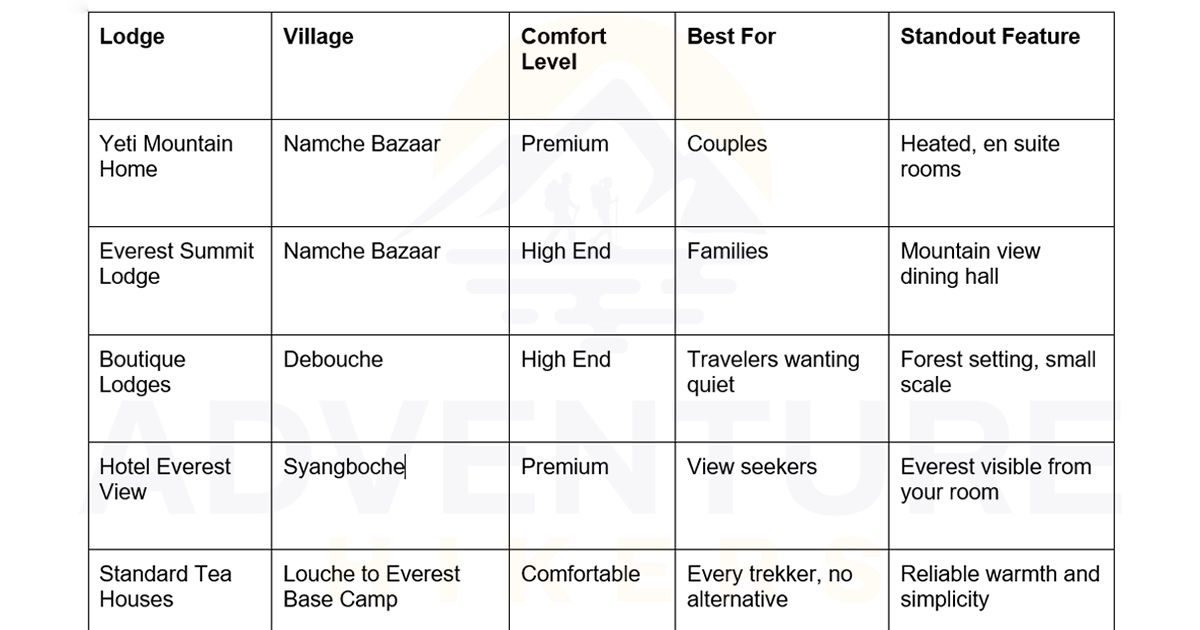
A pattern becomes clear pretty quickly. The highest comfort clusters in the lower and middle Khumbu, right where your body is still adjusting to altitude and could use the extra rest. By the time you reach the higher villages, the mountain itself takes over as the main event, and the lodges settle into a simpler, dependable role. That balance is intentional, and it is part of what makes the Luxury Everest Base Camp Trek feel well-designed rather than luxury for the sake of a label.
What's on the Menu: Dining at Altitude
Food rarely gets top billing when people discuss luxury trekking, but on this route it earns its place. A long day of walking through thin air leaves you genuinely hungry, and the difference between a basic plate of noodles and a proper, well-cooked meal is bigger than you might expect.
- Fresh, multi-course meals: Rather than one option cooked in bulk, lodges along the Everest Luxury Trek serve proper courses, often starting with soup before the main dish arrives.
- Sherpa staples done well: Dishes like dal bhat and momos show up throughout the trek, but here they are made with more care and better ingredients than you would find at a basic tea house.
- International comfort food: Pizza, pasta and other familiar dishes are common too, which is a small but welcome relief after several days of trekking.
- Bakery items and real coffee: Namche in particular is known for its bakeries, which turnout fresh pastries and proper espresso, a genuine surprise this high in the mountains.
- Hygiene taken seriously: Kitchens at these lodges follow stricter food safety practices, which matters more than people realize when it comes to staying healthy at altitude.
- Dietary requests handled in advance: Vegetarian, vegan or allergy-specific meals can usually be arranged, as long as your guide or operator knows ahead of time.
None of this happens by accident. It reflects the same thinking behind every other part of the trek, that comfort and nourishing food directly support how well you handle the physical demands of the days ahead. A well-fed trekker is a well-rested one, and a well-rested trekker tends to enjoy the mountains a great deal more.
How Adventure Hikers Build This Experience
That kind of comfort isn’t by accident; it’s the result of years of working with the right lodges and planning every itinerary carefully. This is how Adventure Hikers does it:
- Handpicked lodge partners: We work with trusted properties like Yeti Mountain Home and Everest Summit Lodge, not whichever lodge happens to have space that night.
- Five-star bookends in Kathmandu: Your trip starts and ends in comfort, with a proper hotel stay before and after the mountain portion.
- Private airport and vehicle transfers: No shared shuttles or waiting around, just a smooth, private ride from the moment you land.
- Helicopter return Option: Skip the long walk back down and fly directly from Everest Base Camp to Kathmandu instead.
- Experienced local guides: Sherpa guides who know the trail, the altitude and the lodges personally, not just the route on a map.
- Flexible, honest itineraries: We plan around real comfort where it is available and set expectations clearly where it is not.
- Personalized service throughout: From your first inquiry to your final night in Kathmandu, we take care of the details so you don’t have to.
- This is what turns a well-built itinerary into an actual Luxury Everest Base Camp Trek, rather than a standard trek with a few extra amenities added on top.
Luxury vs. Traditional Trek: Is the Upgrade Worth It?
By now you have seen what luxury actually looks like along the trail, so the natural next question is whether it is worth paying more for. Here is how the two experiences actually compare, side by side.
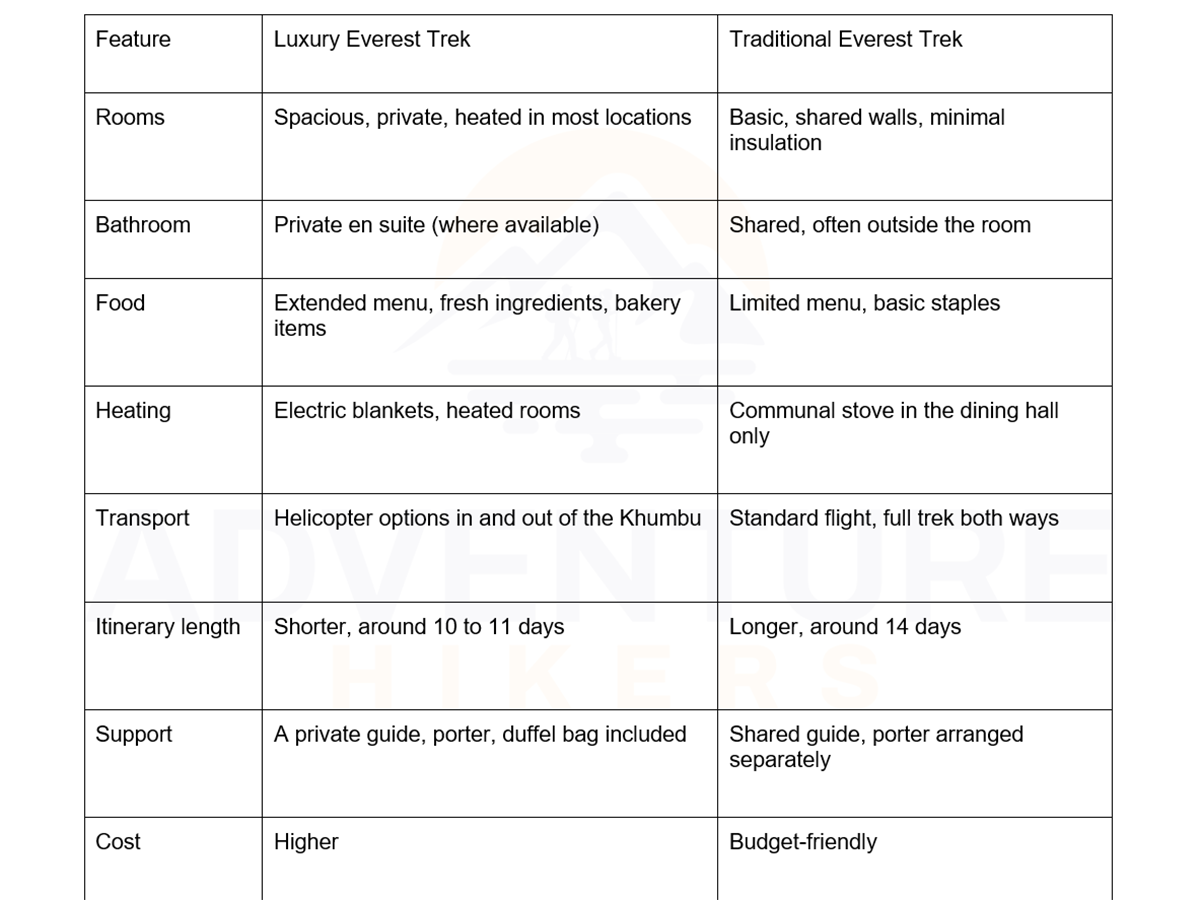
Neither version is the wrong choice. An EBC traditional trek still delivers everything that makes Everest special, and plenty of trekkers genuinely prefer the simplicity of it, the shared dining halls, the unfiltered mountain experience, and the sense of earning every step. What changes with the Luxury Everest Base Camp Trek is how much energy you spend recovering versus enjoying and how much of the physical strain gets softened without cutting a single highlight from the route.
The upgrade tends to matter most for a specific kind of traveler. Honeymooners, older trekkers, first-timers to the Himalayas and anyone working with limited holiday time usually get the most value from it. If you would rather spend your evenings resting well and your mornings feeling recovered, rather than simply surviving the cold, the luxury version is where that trade-off pays off the most.
Conclusion,
Everest has never really been about where you sleep, but as this guide shows, it quietly shapes everything else about the trip. The lodges along the Everest Luxury Trek turn long, demanding days into something you actually recover from overnight, whether that means a heated room in Namche, a quiet forest stay in Deboche, or an unforgettable night facing Everest itself at Hotel Everest View. Comfort here was never about indulgence for its own sake. It was built to help you rest better, acclimatize better, and ultimately enjoy the mountains more fully, without losing a single highlight of the classic route along the way.
If reading through this village-by-village journey has you picturing yourself on that trail, now is a good time to make it real. Reach out to Adventure Hikers and let us build your own Luxury Everest Base Camp Trek, handpicked lodges, experienced guides, and every detail handled from the moment you land in Kathmandu to the moment you fly home. Book Your Luxury Everest Trek With Adventure Hikers