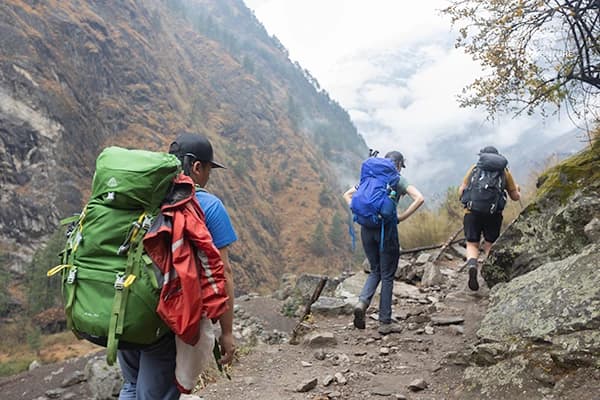
When people think about trekking in the Manaslu region, the mountain itself usually comes to mind first. It's the eighth highest peak in the world, rising past 8,000 meters. But there's much more to this region than just stunning views.
The Manaslu Conservation Area is one of Nepal's richest pockets of biodiversity. If you're walking through it with your eyes open, you're sharing the trail with some genuinely rare company.
Snow leopards prowl the high ridgelines. Red pandas stay tucked away in the forest canopy. Over a hundred bird species call this valley home. Add in Himalayan tahr, musk deer, and a surprising number of frogs and butterflies, and you start to see that the area isn't just a trekking route. It's a living ecosystem, and it happens to have some of the best mountain scenery on Earth as its backdrop.
In this guide, we'll walk you through what wildlife you can expect to see. We'll also cover what you probably won't, no matter how badly you want that snow leopard photo. You'll learn where and when you're most likely to see wildlife and how local culture has helped keep it safe for centuries. If you're planning your own trip through the Manaslu region, this guide is everything you need to know before you go.
Beyond the Peaks: The Wild Side of the Manaslu Conservation Area
Why Manaslu Is a Biodiversity Hotspot?
The numbers alone tell you this place is special. The conservation area covers 1,663 square kilometers and stretches from around 1,400 meters all the way up to over 8,000 meters at the summit of Manaslu itself. That kind of elevation range means the landscape shifts dramatically as you climb, from warm subtropical forest near the river valley to bare rock and ice near the top.
That range of climate zones is precisely why the wildlife here is so varied. A single trek through this region can take you through several entirely different habitats, each with its own set of animals and plants.
Here's a quick snapshot of what's living within the conservation area:
- Mammals: around 33 species, including snow leopard, musk deer, and Himalayan tahr.
- Birds: over 110 species recorded; some sources put the number closer to 200.
- Reptiles: 3 known species.
- Flowering plants: an estimated 1,500 to 2,000 species.
- Frogs: at least 4 documented species.
- Butterflies: around 11 species.
This kind of diversity is rare for a single trekking region, and it's part of what makes routes like the Manaslu Circuit Trek so different from more heavily trafficked routes like Everest or Annapurna. The forest here is quieter, less disturbed, and still wild enough to support animals that have disappeared from other parts of the Himalayas. If you'd rather take in the scenery at a slower pace with a camera in hand, the Manaslu Photography Trek is built for exactly that.
Iconic Mammals of Manaslu
Thirty-three mammal species live within the conservation area. Here's a closer look at the ones you're most likely to hear about and maybe even see on the trail.
Snow Leopard
The snow leopard is the animal everyone hopes to spot on a Manaslu trek. It is the most elusive resident of the conservation area and also its biggest draw for wildlife lovers. These big cats stay at high altitude, moving quietly through rocky, snow-covered terrain where their thick fur blends right into the landscape.
- Found above 3,000 meters, mostly on rocky ridgelines and cliffs.
- Solitary and mostly active at dawn and dusk.
- It feeds mainly on blue sheep and Himalayan Tahr.
- Sightings are rare, but paw prints and scat are commonly spotted on higher passes.
- Best chances are during early morning treks with an experienced local guide, like those we cover on the Manaslu Base Camp Trek.
Red Panda
Red pandas are smaller and shyer than most people expect. They live in the midhill forests, often among rhododendron, oak, and bamboo. Because they are mostly active at dawn and dusk, a quiet early morning walk gives you the best odds of spotting one.
- Lives in temperate forest zones, generally between 2,200 and 3,500 meters.
- The diet consists mainly of bamboo shoots and leaves.
- Spends much of its time resting in trees during the day.
- Considered endangered, making any sighting a rare treat.
- Guides familiar with local forest patches can improve your chances significantly.
Musk Deer
Musk deer are small, quiet, and easily startled. They prefer dense forest cover and tend to move away from the trail long before a trekker gets close, which is why they are more often heard than seen.
- Stands only about 50 to 60 centimeters tall at the shoulder.
- Prefers steep, forested slopes with thick undergrowth.
- Male musk deer have visible fangs instead of antlers.
- Historically hunted for musk pods, which is part of why local hunting bans matter so much here.
- Best spotted on quiet stretches of trail early in the morning.
Himalayan Tahr
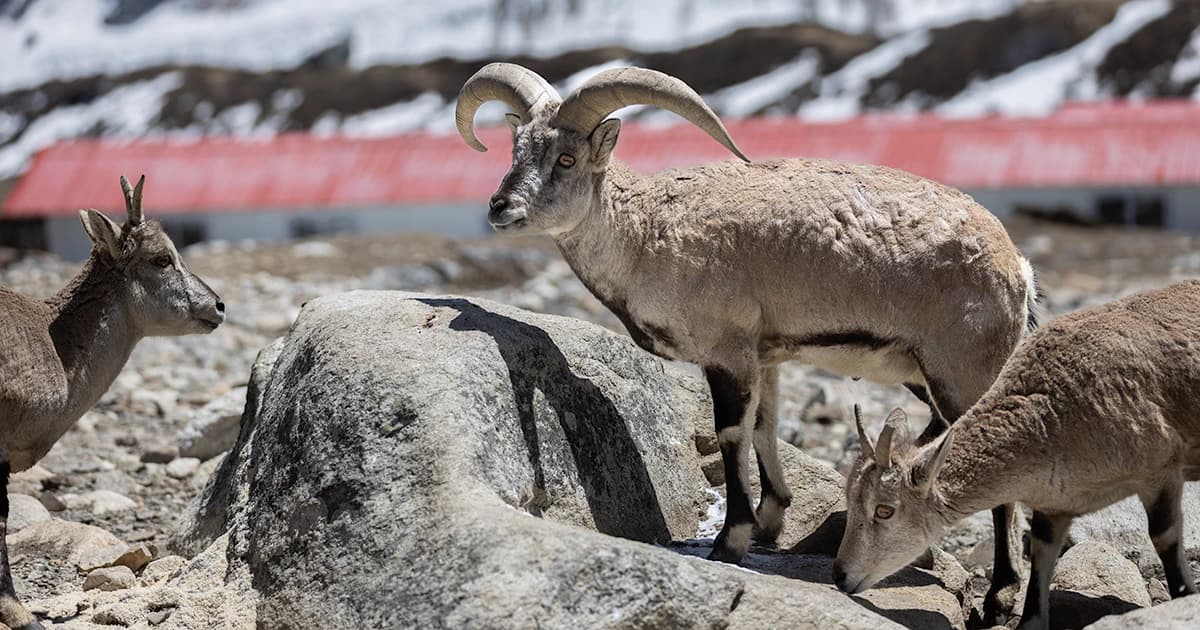
Of all the larger mammals in Manaslu, the Himalayan tahr is one of the most reliable sightings. These wild goats are well adapted to steep terrain and are often visible grazing on rocky slopes in plain view of the trail.
- Lives on steep, rocky slopes between roughly 2,500 and 5,000 meters.
- Moves in small herds, which makes them easier to spot than solitary animals.
- A thick woolly coat helps it survive cold, high-altitude conditions.
- Often seen from a distance without needing binoculars.
- One of the more approachable large mammals for casual wildlife watching.
Himalayan Serow and Blue Sheep
These two grazing animals share similar high-altitude habitats, and both play an important role in the local food chain. Blue sheep in particular matter here, since they are one of the main prey species that support the snow leopard population.
- Both species graze on alpine grasses and shrubs at higher elevations.
- Blue sheep move in herds, offering better sighting odds than solitary grazers.
- Himalayan serow prefers steeper, more forested terrain than blue sheep.
- Blue sheep sightings often hint that a snow leopard may be nearby.
- Early morning and late afternoon are the best times to spot both.
Assam Macaque
Assam macaques live in the warmer, lower forests near the start of the trek, which makes them one of the easiest animals to see early in your journey, often before you have even reached the higher passes.
- Found in subtropical and lower temperate forest zones.
- Lives in troops, so sightings often involve multiple individuals at once.
- The diet includes fruit, leaves, and insects.
- Frequently spotted near forest edges close to trekking trails.
- A good confidence booster for wildlife spotting before the harder terrain begins.
Smaller Mammals Worth Watching For
Beyond the headline species, a handful of smaller mammals round out the picture and are worth keeping an eye out for.
- Red fox: Adaptable and found across a range of elevations.
- Jackal: Often heard calling at night more than seen during the day.
- Brown bear: Rare and found in remote, high-altitude terrain.
- Woolly hare: Well camouflaged against rock and snow.
- Himalayan marmot: Sits upright near its burrow and whistles when it senses danger, making it one of the more entertaining smaller mammals to watch.
If wildlife spotting is a priority for your trip, it helps to trek with a guide who knows current animal movement patterns. Trekkers who want to combine wildlife with the region's Buddhist heritage often pair their route with the Tsum Valley Trek or the longer Manaslu Tsum Valley Trek, both of which pass through some of the quietest, most animal rich forest in the conservation area.
Birdlife: A Watcher's Paradise
Manaslu is just as rewarding for birdwatchers as it is for mammal spotters. Over 110 bird species have been recorded in the conservation area, and the number climbs even higher once you account for seasonal migrants passing through. Because the region sits right between the Tibetan Plateau and the lower Himalaya, it acts as a natural corridor for birds moving between climate zones.
Impeyan Pheasant (Danphe)
For many trekkers, the Danphe, Nepal’s national bird, is a real highlight. In the sun, its iridescent feathers flash green and blue and copper, so it’s difficult to miss when it’s out in the open.
- It is found on forested and shrub-covered slopes at mid- to high elevations.
- Males are especially colorful, but females are dull and camouflaged.
- Often observed foraging on the ground in small groups.
- More active in the morning.
- One of the most photographed birds on the trek.
Crimson Horned Pheasant (Satyr Tragopan)
This beautiful bird is a favorite among birdwatchers, known for its deep red plumage and the small blue horns that males display during courtship.
- Prefers dense forest with thick undergrowth.
- Shy and ready to conceal themselves when disturbed.
- Best seen at dawn when it is more active and less wary.
- It is seen less often than the Danphe, and so a sighting of it is special.
Himalayan Griffon Vulture
These are large birds, and you can't help but notice them when they take off. They have wingspans of nearly 2.5 meters and are often seen soaring high above the valley on thermals.
- Scavenger species, feeding mostly on carrion.
- Seen often flying around cliffs and high ridgelines.
- The scavenging of carcasses is an important part of the local ecosystem.
- Best viewed on clear sunny days when thermals are strong.
Golden Eagle
Another, more powerful predator that you may see soaring overhead is the golden eagle, known for its speed and hunting accuracy.
- Preys on small mammals (e.g., marmots, hares).
- Likes open high-altitude terrain for hunting.
- They are often seen soaring alone rather than in pairs or groups.
- A good pair of binoculars helps you see them clearly.
Other Birds to Watch For
Beyond the headline species, the sheer variety of birdlife means there’s almost always something interesting overhead or in the brush nearby.
- Sunbirds and finches: Common in lower forested areas, often seen near flowering shrubs.
- Laughing thrushes: Noisy and social, frequently heard before they are seen.
- Cuckoos: More often heard calling than actually spotted.
- Snow pigeons: Found at higher elevations, often in flocks near rocky outcrops.
If birding is a big part of why you're heading to Manaslu, timing your trek for spring or early autumn tends to give you the widest variety of sightings. The Short Manaslu Trek is a good option if you want a taste of this birdlife without committing to the full circuit.
Reptiles, Amphibians, and Smaller Creatures
Mammals and birds tend to get all the attention, but Manaslu is also home to a quieter layer of wildlife that most trekking blogs barely mention. These smaller creatures matter too, since they say a lot about how healthy this ecosystem actually is.
Reptiles
Only three reptile species have been documented within the conservation area, which makes sense given the cold, high-altitude terrain that dominates much of the region.
- Mostly limited to snake species found at lower, warmer elevatios.
- More active during the warmer months, roughly April through September.
- Rarely encountered on the trail, since most stay well away from foot traffic.
- Their scarcity reflects how much the climate here shapes which species can survive.
Amphibians
At least four frog species have been recorded in the conservation area, a detail that other guides on this region often omit.
- Amolops formosus: Found near fast-flowing streams and rocky stream beds.
- Nanorana liebigii: Common at mid-elevation, often near water sources.
- Ombrana sikimensis: Prefers cooler, moist forest habitats.
- Duttaphrynus himalayanus: A toad species adapted to a wide elevation range.
These frogs depend on clean, unpolluted water sources, so their presence is actually a positive sign of environmental health along the trail.
Butterflies
Around 11 butterfly species have been recorded across the conservation area's 11 different forest types, adding a splash of color to the lower and mid-elevation stretches of the trek.
- Most active during spring and early summer months.
- Commonly seen near flowering plants and open meadows.
- Diversity tends to drop as elevation increases and forest cover thins out.
- A good reason to keep your camera ready even on the easier, lower sections of the trail.
None of these smaller species get the spotlight the way snow leopards or red pandas do, but they round out what makes this region such a rich place for nature lovers, not just trekkers chasing big mammal sightings. If you're planning a route through here, it's worth checking the latest permit rules for restricted areas, since Manaslu falls under this category and requires proper documentation.
Flora and Fauna Types
Wildlife is not isolated; it relies on the forests and plants that constitute its habitat. The animals we've discussed rely on the forests and plants in their habitat, and Manaslu's plant life is as diverse as its fauna.
The conservation area holds 11 distinct forest types, shaped by that significant elevation range we mentioned earlier. As you climb from the warm river valleys near Jagat toward the high passes, the vegetation changes almost every few hundred meters.
Lower-elevation forests (below 2,000 meters)
- Subtropical forest with sal and chir pine.
- Warmer, humid conditions support the widest range of plant and insect life.
- Home to Assam macaques and many of the butterfly and frog species mentioned earlier.
Mid-elevation forests (2,000 to 3,500 meters)
- Rhododendron, oak, and maple dominate this zone.
- Spring brings a dramatic bloom of rhododendron flowers across the hillsides.
- Prime habitat for red pandas, musk deer, and pheasants like the Danphe.
High-elevation zones (above 3,500 meters)
- Forest gives way to alpine shrubs, grasses, and eventually bare rock.
- Supports blue sheep, Himalayan tahr, and snow leopards.
- Fewer plant species overall, but the ones that survive here are tough and highly adapted.
Across all these zones, the conservation area supports an estimated 1,500 to 2,000 species of flowering plants. Some are used locally for traditional medicine, and many play a direct role in supporting the animals higher up the food chain. If you want to catch the forests at their most colorful, spring is the best season, and it lines up well with routes like the Manaslu Circuit Trek, which passes through several of these zones in a single trip.
Culture and Conservation: The Human Side of Wildlife Protection
What sets Manaslu apart from other trekking areas is the close link between the local culture and wildlife conservation.
Shyagya is an ancient code of conduct practiced by the Tsumba and Nubripa communities living in the Tsum Valley and surrounding areas. It’s a practice that comes from the Tibetan Buddhist tradition and that doesn’t allow hunting or violence toward animals in their land. This is not an outside-imposed modern conservation policy. It’s a belief system that’s been in place for generations and it’s a big reason why wildlife here has survived as well as it has.
Local monasteries and their Lamas are also directly involved. Religious leaders in the region actively warn people against harming animals, and that advice is taken seriously in daily life. “It is a rare case of faith and conservation working hand in hand rather than as separate initiatives.
On this cultural base, the Manaslu Conservation Area Project runs organized programs to help people and wildlife.
- Community-based management, where local residents help lead conservation efforts rather than following outside rules.
- Environmental education programs aimed at younger generations.
- Sustainable farming initiatives that reduce pressure on forest land.
- Tree planting and habitat restoration projects.
Entry fees paid by trekkers go directly toward funding this work. So every trekker walking through the region, including those on the Tsum Valley Trek, is contributing to conservation just by being there.
If you're curious about the deeper history and culture behind this region, our post on the Manaslu Base Camp Trek with Larke Pass covers more of the route's cultural landmarks alongside the trekking details.
When and Where to Spot Wildlife
Timing and location make a real difference when it comes to wildlife sightings. Here's a quick breakdown to set realistic expectations.
By season
- Spring (March to May): Rhododendrons bloom, pheasants are active, and butterflies appear in large numbers. One of the best all-around seasons for wildlife.
- Autumn (September to November): Clear skies make high-altitude spotting easier. Good season for birds of prey and grazing animals like blue sheep and tahr.
- Winter and monsoon: Harder trekking conditions and lower visibility. Fewer sightings overall, though some animals move to lower elevations.
By elevation
- Lower valley (1,400 to 2,000 meters): Assam macaques, butterflies, frogs, and lower-elevation birds.
- Mid hills (2,000 to 3,500 meters): Red pandas, musk deer, pheasants, and the widest overall variety.
- High altitude (above 3,500 meters): Blue sheep, Himalayan tahr, snow leopards, and raptors like the golden eagle.
It's best to set expectations early. Most trekkers won't see a snow leopard, and that's normal. What you will likely see, especially on a well-timed trek, is a steady stream of birds, grazing animals, and the occasional monkey troop near the lower trail. If your main goal is wildlife rather than just reaching a pass, a slower-paced route like the Manaslu Base Camp Trek gives you more time in the mid-elevation zones where sightings are most frequent.
Responsible Wildlife Viewing Tips
Seeing wildlife is a privilege, and how trekkers behave on the trail directly affects how much longer that will be true. A few simple habits can have a significant impact.
- Keep a respectful distance and never approach or feed wild animals.
- Be quiet, especially early in the morning and late in the afternoon when animals are most active.
- Please remain on marked trails and avoid sensitive habitat areas.
- Take out all trash and leave no trace of your visit. No single-use plastics.
- Hire a licensed local guide who understands current animal movement and behavior.
- Respect local customs, including areas where hunting has long been culturally prohibited.
These small choices matter more here than in most places, since Manaslu's wildlife has thrived largely because of restraint, both cultural and practical.
Conclusion
Manaslu is often marketed for its mountain views, and rightly so. But the wildlife here deserves just as much attention. Snow leopards, red pandas, pheasants, frogs, and butterflies all share this landscape, held together by forests that shift with every few hundred meters of elevation and a local culture that has protected animal life for generations.
Whether you're chasing a specific species or just want a trek that feels genuinely wild, the Manaslu Conservation Area delivers something most other Himalayan routes can't. If you're ready to start planning, take a look at our full range of Manaslu region treks, including the Manaslu Tsum Valley Trek for those who want to combine wildlife, culture, and some of the best mountain scenery in Nepal into one journey.
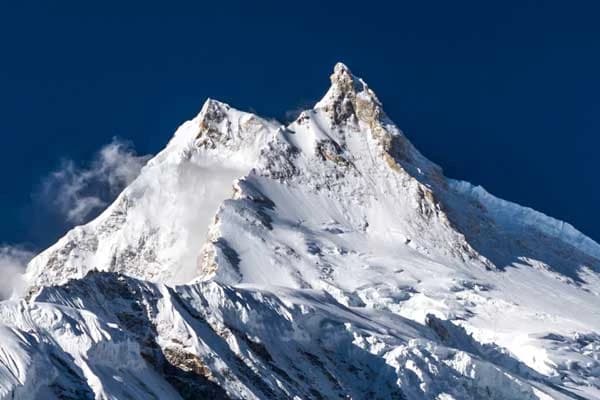
Best Viewpoints on the Manaslu Circuit Trek
Continue Reading
Manaslu Photography Trek: Best Spots and Timing
Continue Reading