What is a Group Join Trek to Manaslu?
A group joining the Manaslu trek simply means you book a single seat on a trek we already have scheduled for a fixed date. Instead of planning your own private trip, you join other trekkers who have booked the same departure. We handle everything ahead of time: the permits, the guide, the teahouse stays, and the transport. You just arrive in Kathmandu on the confirmed date, meet your group, and start the trek together. It is a simple way to do the Manaslu Circuit without needing to find your own trekking partner first.
Unlike a private Manaslu trek, where you can choose your dates and walk at your own pace, usually with your own guide and porter, this group trek offers a more social experience at a lower cost. Group joining works well for solo travelers, couples, or small groups of friends who want company on the trail and a lower overall cost. You still get an experienced guide and proper support from us, but you share the trek with a small group instead of going alone. For many trekkers heading to a restricted region like Manaslu, this option also makes the whole trip easier to plan, since we take care of permits, guides, and logistics for you from the start.
How Matching Actually Works Behind the Scenes
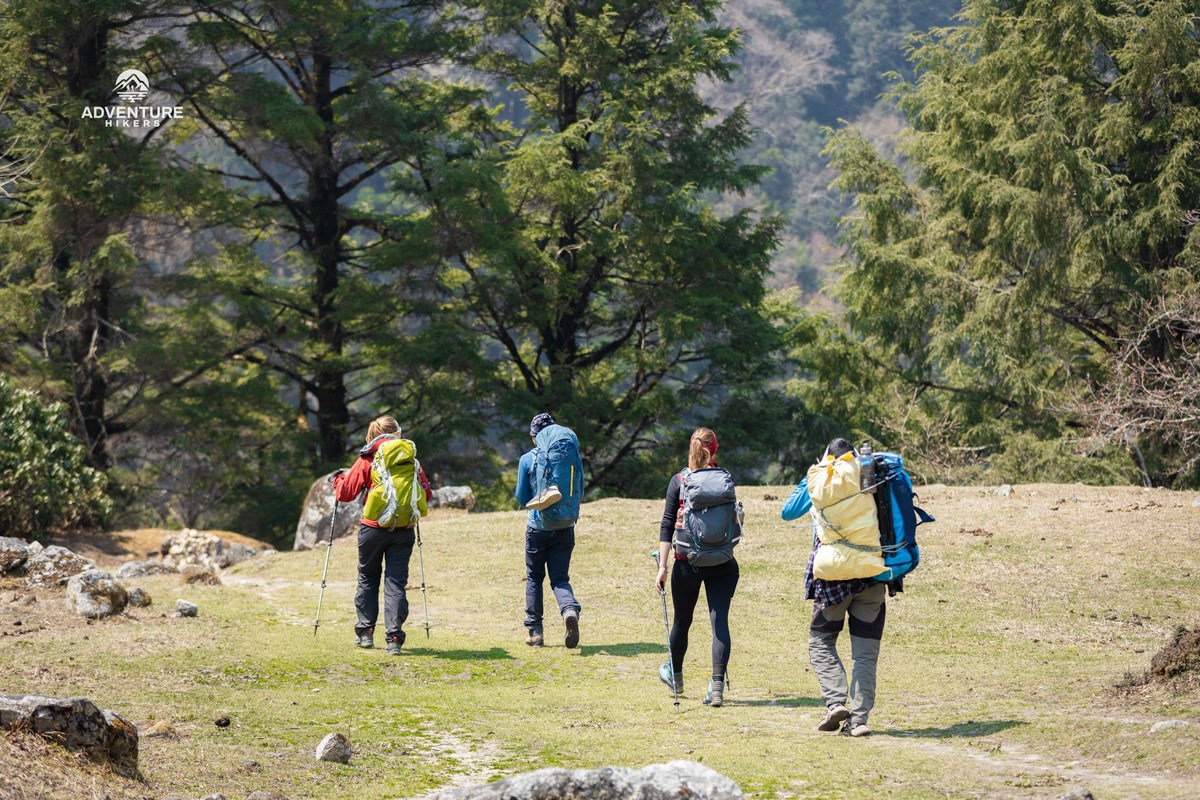
Once you book a Manaslu group join trek with us, we start matching you with other trekkers who have chosen the same departure date. You might end up walking with people from different countries, and that is part of what makes group trekking fun. If your date is already marked "guaranteed," we confirm your spot right away, since it will run no matter how many people join. If the date is still open, we keep you updated as more trekkers book in, so you are never left guessing close to your travel dates.
A common worry solo trekkers have is what happens if nobody else books the same date. With the updated permit rules, such a scenario isn't an issue anymore, since you can trek solo with a registered guide even if no one else joins. If you'd still prefer company on the trail, we can shift you to a nearby date with more trekkers already confirmed. Our deposit and refund terms are outlined clearly before you pay, and if a departure genuinely cannot go ahead, we offer a full refund or a free date change. Reading this section of our terms carefully can save you stress later, especially if your travel dates are fixed around flights.
Fixed Departure Dates for Manaslu Circuit Trekking for 2026/2027
We run regular Manaslu Circuit Trek group departures through September, October, November, and December 2026/2027 so you have a good spread of dates to choose from. All of these dates are currently open for booking at US$999 per person, based on a full group size.
Manaslu Circuit Trek Fixed Departure Join Group 2027 Spring
Group Join Manaslu Circuit Trek 2027 Autumn
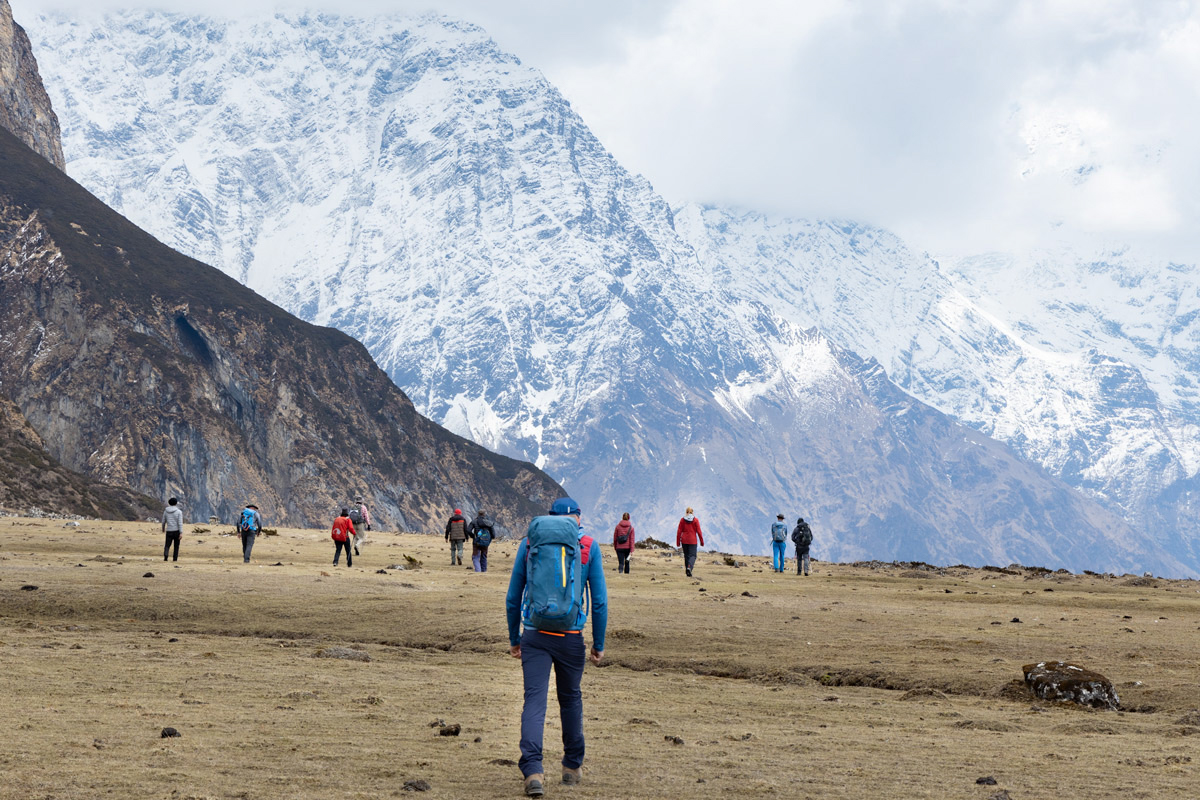
More departures continue into October, November, and December as the autumn season is the busiest and most popular time to trek Manaslu. Since spots fill up during these peak months, it is a good idea to lock in your date early, especially if your travel plans depend on specific flight dates.
You can visit our availability section for the Manaslu Circuit trek to check fixed departure dates for other months and years like 2026/2027 or contact us directly by email or WhatsApp if you don't see a date that works for you. We can often add a departure or place you on the nearest available group.
Manaslu Circuit Trek Outline Itinerary
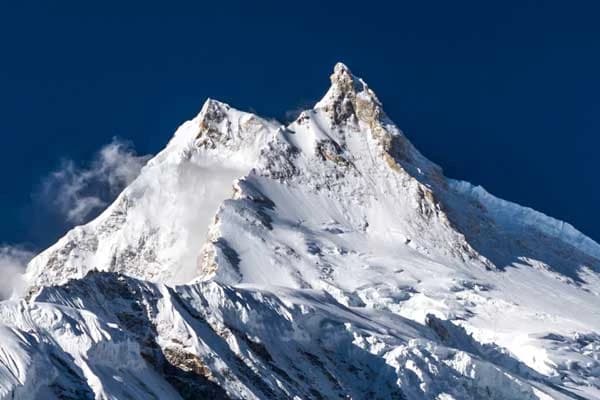
A 11 days Manaslu Circuit Trek Itineray follows Bhudi Gandaki River, leading you through terraced field, sub-tropical forests, High Himalayan villages, culture and lifestyle right to the foot of Mount Manslu 8163 m. This day-by-day 11 days Itinerary designed to ensure safe altitude acclimatization and leads up to the Larky La Pass 5106 m before descending Bhimthang and lower valley.
Day 01: Drive to Machha Khola (930 m/3050 ft) 7-8 hrs. drive
Day 02: Trek to Jagat (1410 m/4625 ft) 5-6 hrs. walk
Day 03: Trek Deng (1800 m/5904 ft) 6-7 hrs. walk
Day 04: Trek to Namrung Village (2660 m/8725 ft) 6-7 hrs. walk
Day 05: Trek to Syala Gaon (3520 m/11545 ft) 6-7 hrs. walk
Day 06: Trek to Samagaon (3530 m/11778 ft) via Pungen Gumpa acclimataze hike (4000 m/13120 ft)
Day 07: Trek to Samdo Village (3875 m/12710 ft) 3-4 hrs. walk
Day 08: Trek to Dharmasala (4470 m/14662 ft) 4-5 hrs. walk
Day 09: Trek to Bhimthang (3720 m/12202 ft) via Larkya La Pass (5106 m/16748 ft) 8-9 hrs. walk
Day 10: Trek to Tilje (2300 m/7544 ft) 6-7 hrs. walk
Day 11: Drive to Kathmandu (1400 m/4592 ft) 8-9 hrs drive
Where Your Money Actually Goes
We keep our Manaslu Circuit Trek cost simple and tied directly to group size. If you book as a solo trekker, the price is US$1399. Join with a small group of 2 to 6 people, and it drops to US$1099 per person.
If your departure fills up to 7 or more trekkers, the price comes down further to US$999 per person. The bigger the group, the more the shared costs, like permits, guide fees, and transport, get spread out, so everyone pays less.
This price covers more than just the trek itself. It includes your Manaslu Restricted Area permit, MCAP and ACAP permits, a government-registered guide, full board meals on the trail, all ground transport, and even 3 nights at a hotel in Kathmandu before and after your trek.
Things like travel insurance, tips, and porter service are not included, though you can add a porter for US$300 if you want help carrying your bag. We also offer a 10% discount for early booking. If you would prefer to have your own room rather than share, then there is a single supplement of US$500. This means that you know exactly what you are paying for before you book.
Group Join vs. Private Trek — An Honest Comparison
Whether you choose a group join Manaslu trek or a private Manaslu Circuit Trek is really about how much control you want over your own schedule. Joining Group allows you to choose from our set departure dates and travel with other trekkers who have booked the same slot.
You follow the itinerary with your guide and group; the route, pace and rest days are all planned for you. It works well if you are comfortable with a set plan and want the lowest possible cost (as permits, guide fees and transport are shared among all in the group).
In contrast, a private trek focuses on your needs. You can choose your own start date as opposed to choosing from our calendar and the itinerary can be customized to suit your pace, whether that be more acclimatization days, a slower walking speed or side trips like Manaslu Base Camp Trek or Birendra Lake.
You have your own guide and porter, and you can more flexibly combine the Manaslu Circuit with Tsum Valley or extend your trip. But there is a cost to this flexibility, as you are not sharing costs with a bigger group. If this is a better route for you, please contact us through our Customize Trip option.
Here's a quick way to think about which one fits you:
- Choose a group joining if you want the lowest cost, don't mind a fixed date, and enjoy meeting other trekkers along the way.
- Choose a private trek if your schedule is flexible, you want extra rest days or side trips, or you prefer trekking at your pace.
- Choose a group joining if you are traveling solo and want built-in company on the trail without having to arrange your own trekking partner.
- Choose a private trek, if you are trekking with family or a small group and want privacy without other trekkers joining in.
- Both options include permits, a government-registered guide, full-board meals, and all ground transport, so you can count on safety and support either way.
There is no wrong choice here. It really depends on whether you value cost and companionship or flexibility and control over your own trekking days.
Larkya La Pass Trek: What Actually Makes This Day Hard
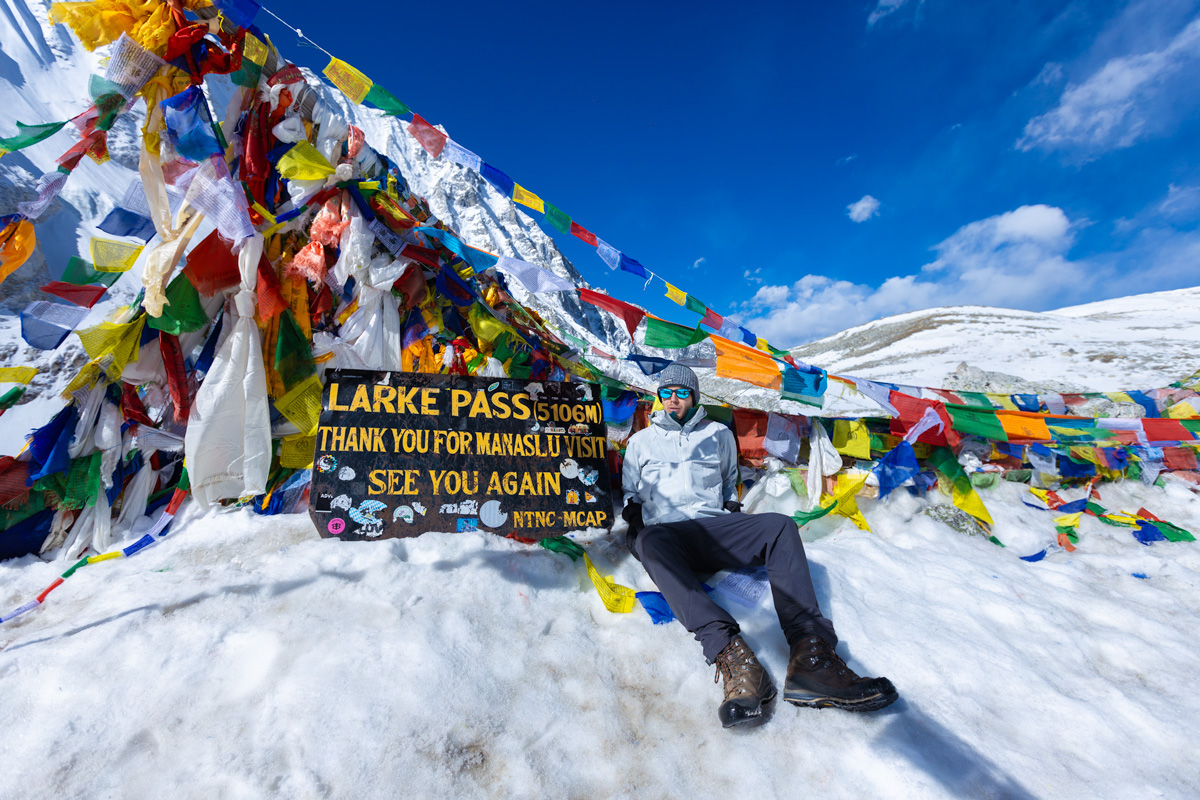
Every trekker who completes the Manaslu Circuit Trek will tell you the same thing: Day 10 is the day that stays with you. This is when you cross Larkya La Pass, sitting at 5,106 meters, the highest point of the entire trek. It is also the longest and most demanding day of the whole itinerary so knowing what it actually entails helps you prepare properly rather than just reading “challenging” and moving on. The day begins early, around 4 am; it is still dark and cold. It is not just tradition. Starting early, before sunrise, helps you avoid the strong winds that tend to develop on the pass later in the morning and gives you enough daylight to make the full crossing safely. Technically the ascent is not very difficult, so you do not need ropes or climbing equipment, but the high altitude, freezing cold and long walking day make it physically very demanding, more so than almost any other day on the trek.
Here is what actually happens on this day, step by step:
- Early wake-up and departure—You leave Dharmasala around 4 AM, well before sunrise, to take advantage of the calmer morning weather.
- Steady climb to the pass—The trail is a steady climb at first and then it gets steep again as you near the top. The air is so thin that even slow walking feels like an effort.
- Reaching the summit—At 5,106 meters, Larkya La is a glacial saddle north of Mt. Manaslu, and from here you get sweeping views of ten peaks above 6,500 meters, several of them rising past 7,000 meters.
- A brief but memorable pause—Most trekkers stop here to take photos and take in the view, since this location is widely considered the highlight of the entire Manaslu Circuit Trek.
- Long descent to Bimthang—After the pass the trail descends and some parts are steep and slippery, so careful foot placement is more important than speed here.
- Total duration—The full day typically takes 8 to 9 hours from start to finish, making it the longest single day of the trek.
What makes this day hard is not one single factor but the combination of all of them together. The altitude alone can make you feel breathless even when doing very little. Add in the early start, the cold morning air, the length of the walk, and the steep descent afterward, and it becomes clear why this is the day our guides pay the closest attention to your pace and well-being.
The reassuring news is that our itinerary builds in proper acclimatization days beforehand, at Samagaon and Samdo, so your body has time to adjust before this day arrives. By the time you reach Larkya La, most trekkers find that the buildup of the entire journey, culture, villages, and mountain views has prepared them for this one demanding but deeply rewarding day.
What Might Go Wrong And How It's Handled
Trekking to a remote high-altitude region such as Manaslu is not without real challenges and we believe in being upfront about them rather than just showing the highlight reel. Knowing what can happen and how our team will respond allows you to hike with more confidence instead of unnecessary worry. Most problems on the trail can be fixed if caught early and that’s why our guides stay close to your group for the entire journey.
The most frequent concern is altitude sickness. Above 3500 meters some trekkers get headaches, nausea, dizziness or breathlessness due to the thinner air. We already build in acclimatization days at Samagaon and Samdo are in our itinerary to mitigate this risk and our guides carry a pulse oximeter to check oxygen levels daily. If any member of the group shows signs of altitude sickness, the guide slows the pace, carefully monitors the symptoms, and arranges a descent or emergency evacuation if necessary, rather than letting anyone soldier through it.
Here are the other situations trekkers sometimes worry about and how we handle each one:
- Weather delays near the pass: Snow or strong wind near Larkya La can occasionally slow down or delay a crossing. Our guides make the final call on timing based on real conditions, prioritizing safety over sticking rigidly to the schedule.
- Personality mismatches within the group: Since group joining means trekking with people you have not met before, it is natural to wonder if you will get along. Our guides help keep the group dynamic comfortable, and trekkers often find that shared challenges like the pass crossing bring people together quickly.
- Group departure runs even if numbers are low: If a departure doesn't attract many trekkers, you don't need to worry, since solo trekkers can now get a permit through a registered agency with a guide. If you'd still prefer to trek with others, we can shift you to a nearby confirmed date with more trekkers already booked, so you always have a solution that works for you.
- Injuries or illness on the trail: Our guides carry a first aid kit and are trained to handle common trail injuries. For anything more serious, we coordinate directly with our Kathmandu office to arrange the right support quickly.
- Limited access to medical facilities: Given how remote the region is, we always recommend travel insurance that covers high-altitude trekking and emergency helicopter evacuation, so you are properly covered if a serious situation does arise.
That doesn’t mean the trek is unsafe. It means we prepare for these contingencies ahead of time, so if something does happen, you won’t face it alone. Our guides are specifically trained for high altitudes, and you can always reach our office in Kathmandu if you need to make a quick decision. Being prepared for what might go wrong is one of the things that makes the experience feel safe, even in such a remote part of the Himalayas.
Best Season for Manaslu Circuit Trek: Spring vs Autumn
The best times for the Manaslu Circuit Trek are spring or Autumn, when the weather is dry and the mountain views are stunning. Spring (March-May) brings milder temperatures and blooming rhododendron forests in the lower sections of the trail. Autumn, from September through November, is our busiest and most popular season, since the skies are usually clear right after the monsoon and the trails are lush and green.
The first week or two of December can also work well, as the weather is often still stable before winter conditions fully set in. Both seasons offer good visibility of Mt. Manaslu (8163 m) and the surrounding peaks, though autumn tends to have the most stable weather for crossing Larkya La Pass (5106 m).
We avoid scheduling regular group departures during summer and winter. The monsoon months from June to August bring heavy rain, muddy trails, and a higher risk of landslides along the lower Budhi Gandaki valley. Winter, from December to February, gets bitterly cold at higher elevations, and snow can make the pass crossing difficult or unsafe.
If you are planning your trip around a specific month, spring and autumn remain the safest and most rewarding choice, giving you the best combination of good weather, clear views, and manageable trail conditions.
Packing Essentials
Packing right for the Manaslu Circuit Trek means preparing for both warm lower valleys and freezing high-altitude mornings near Larkya La Pass (5106 m). You don't need to bring everything from home either, since Kathmandu's Thamel area has plenty of gear shops if you need to pick up something last minute.
Here are the essentials to have with you:
- Clothing layers: A base layer, fleece or insulating mid-layer, and a warm down jacket for the colder sections
- Waterproof shell: A windproof and waterproof jacket and pants for changing weather
- Footwear: Broken in hiking boots, warm socks, and light camp shoes for the evenings
- Sleeping gear: A high-altitude-rated sleeping bag, since teahouse rooms are not heated
- Trekking gear: Hiking poles, a headlamp with spare batteries, and a 40- to 50-liter backpack with a rain cover
- Personal items: sunglasses, sunscreen, a first aid kit, and water purification tablets or drops
- Documents: Passport, travel insurance papers, and extra Nepali cash, since there are no ATMs once you leave Kathmandu
This list is just a quick checklist to get you started. You can find our full, detailed packing list on the Manaslu Circuit Trek page, along with everything you'll need for the entire 13-day journey.
How to Book Your Group Joining Spot
- Choose your desired departure date from our availability calendar, or contact us for availability in another month or year.
- Fill in the booking form with your basic details and passport details.
- Make the deposit to secure your place in the group.
- To be able to process the permit, please send us a copy of your passport and passport-size photos.
- We will arrange all permits for you, including the Manaslu Restricted Area Permit, MCAP, and ACAP.
- Check your pre-departure briefing, including your itinerary, packing list and safety guidelines.
- Arrive in Kathmandu at least one day before the start of your trek.
- Meet your guide and group members personally at our briefing.
- Please settle the balance amount before or during the trek as per your booking terms.
- Start your Manaslu Circuit Trek (13 days) with your group
Conclusion
The Manaslu Circuit Trek is one of the most rewarding high-altitude treks in Nepal and joining a group is often the easiest way to experience it, whether you are trekking solo or just want good company along the way. You choose the date and start planning.
We have fixed departure dates, transparent pricing and a crew that takes care of all the permits and details. Book your Manaslu Circuit group join trek with us at Adventure Hikers today or email or WhatsApp us any questions you may have before committing.