Manaslu Circuit Trek Difficulty at a Glance
The Manaslu Circuit Trek difficulty isn't driven by any single obstacle. It's the combination of altitude gain, remote terrain, and sustained daily effort over nearly two weeks that makes preparation genuinely worthwhile. None of it is technical climbing; there are no ropes or crampons needed on the standard route, but it does demand solid stamina and a realistic acclimatization plan.
Before we get into the details, here's the quick answer:
| Factor |
Detail |
| Overall difficulty |
Moderate to challenging |
| Highest point |
Larkya La Pass, 5,106 m |
| Trek duration |
13 days |
| Starting altitude |
Machha Khola, around 930 m |
| Average daily walk |
6-7 hours (roughly 10-15 km) |
| Toughest day |
Larkya La Pass crossing |
| Permits required |
Restricted Area Permit, MCAP, ACAP, Tsum Nubri entrance
|
| Accommodation |
Teahouses (basic, improves as trail develops) |
| Beginner-friendly? |
Yes, with proper training and a guide |
What Makes the Manaslu Circuit Trek Difficult?
Every trek has its own unique personality of challenges. For Manaslu, six factors are particularly significant, and being aware of them in advance is crucial. Here's a closer look at each one.
High Altitude & Larkya La Pass
Altitude is the single biggest factor behind the Manaslu Circuit Trek difficulty. The trail climbs from around 0 meters near Soti Khola to 5,106 meters at Larkya La Pass, the highest point of the entire route. Above 3,000 meters, oxygen levels drop noticeably, and by the time you're approaching the pass, every step takes more effort than it would at sea level.
The day of crossing the pass is the toughest on the itinerary. Trekkers typically start around 4 AM to cross before afternoon winds pick up, and the combination of thin air, a long ascent, and a steep descent into Bimthang makes it a genuine test of endurance. Altitude sickness (AMS) is a real risk here if acclimatization days are skipped, which is why a well-paced 13-day itinerary with built-in rest days matters more than trying to rush the route.
The good news: altitude-related difficulty is largely manageable. Slow ascent, proper hydration, and listening to your guide's advice go a long way toward reducing risk.
Remote, Rugged Terrain
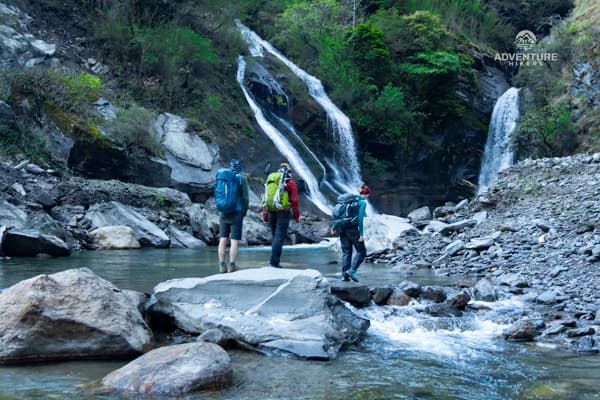
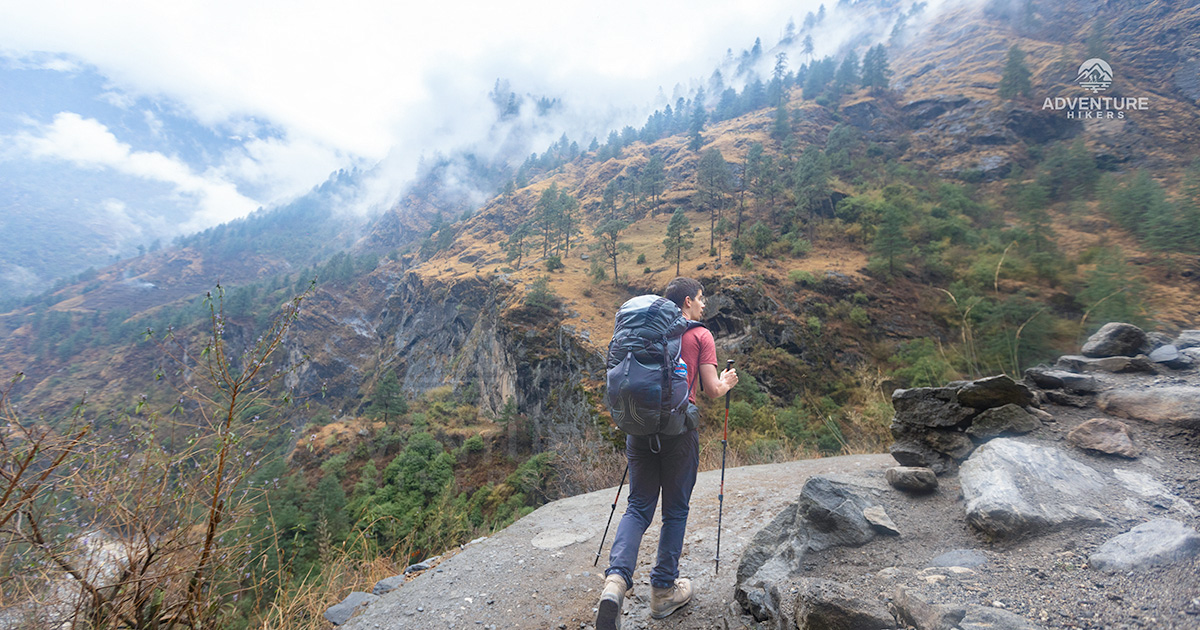
Unlike the well-trodden trails of Everest Base Camp or the Annapurna Circuit, the Manaslu route takes you through some of the most remote terrain in Nepal. The trail is a combination of narrow cliffside paths, landslide-prone sections and rickety suspension bridges over the Budhi Gandaki River, often with a steep drop below.
Underfoot conditions shift constantly. Early days bring subtropical forest trails and stone steps; later stages turn to rocky, uneven paths as you climb higher into the Manaslu region. Around villages like Ghap, the trail cuts through old landslide zones where footing needs extra care, and your guide's instructions matter more than usual.
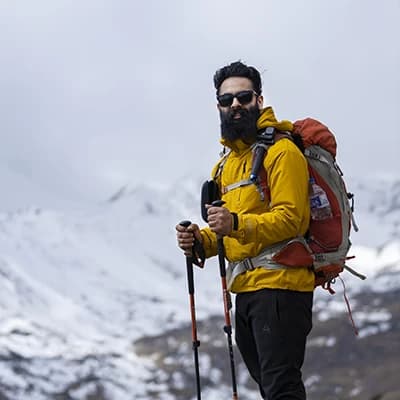
This isn't technical trekking; no ropes or climbing gear are needed, but the terrain is unforgiving of carelessness. Sturdy, broken-in hiking boots with excellent ankle support and trekking poles make a real difference here, especially on the descents where knees take the brunt of the impact.
Because the region remains remote and less commercialized, trail maintenance is minimal compared to Nepal's busier routes. That remoteness is precisely what makes Manaslu appealing to trekkers seeking an authentic, uncrowded Himalayan experience, but it does mean the terrain demands more attention and sure-footedness than a typical teahouse trek.
Long Daily Trekking Hours & Distance
The Manaslu Circuit covers roughly 177 kilometers over 13 days, and most days involve 6 to 7 hours of walking, sometimes stretching to 8 on the longer stages. This leads to significant cumulative fatigue, especially since the 13-day itinerary includes few true rest days.
Daily distances vary quite a bit depending on terrain. Early stages, like Machha Khola to Jagat, cover a relatively gentle 18-22 km. But later legs, such as from Samagaun to Samdo, stretch to 8 km through gradual open trails. The longest and most demanding day of all is the Larkya La Pass crossing itself, where trekkers cover close to 25 km while climbing to 5,106 meters and then descending into Bimthang, often in a single push.
This is where cardiovascular fitness becomes crucial. It's not about total speed; it's about being able to walk steadily for hours, day after day, without your body giving out. Tiredness sets in during the second week and underprepared trekkers often do well in the first week but struggle.
A realistic training plan 6-8 weeks before you go involving hiking, stair climbing and long walks with a loaded daypack will make the daily distances seem doable rather than punitive.
Restricted Area Permits & Limited Infrastructure
The Manaslu region is a restricted area, which adds a difficulty level that most other Nepal treks do not have. Trekkers need three different permits to get in. Toward the end the trail crosses into Annapurna territory so they need the Manaslu Restricted Area Permit, the Manaslu Conservation Area Permit (MCAP) and the Annapurna Conservation Area Permit (ACAP).
We arrange all these permits for you through our registered trekking agency. Until recently, Manaslu required a minimum of two trekkers to get the restricted area permit, but as of March 2026, solo trekkers can now get a permit too, as long as they book through a registered agency and trek with a licensed guide. This isn't just paperwork; it reflects how remote and under-resourced the region actually is.
Infrastructure is also behind busier routes. Mobile networks are patchy at best, ATMs are nonexistent once you leave Kathmandu, and medical facilities consist of only a handful of basic health posts. If a medical situation arises above Samagaun, you will have limited evacuation options, and arranging them can take time. This is part of what makes the Manaslu Circuit Trek difficulty feel higher than routes like EBC, where rescue infrastructure is far more developed.
None of these factors should be discouraging; it's simply the trade-off for trekking somewhere still relatively untouched. Going with an experienced local operator handles the permit logistics and puts a trained guide beside you for exactly these situations.
Unpredictable Mountain Weather
Weather in the Manaslu region can shift quickly, and at altitude, that shift can matter. Clear morning skies can give way to afternoon cloud cover, wind, or snowfall within a few hours, which is precisely why most guides schedule the Larkya La Pass 5106 m crossing for early morning before conditions have a chance to turn.
Temperatures swing widely too. Lower villages near Machha Khola sit in a subtropical climate, while Samagaun and the pass itself can drop well below freezing overnight, even outside of winter. Trekkers who pack for one climate zone and not the other often find themselves underprepared once the trail climbs above 3,000 meters.
Season plays a big role in how much of a factor weather becomes. Spring (March-May) and autumn (September-November) offer the most stable conditions, with clearer skies and lower storm risk. Monsoon season brings landslide risk on the lower trail sections, while winter adds heavy snow at the pass, sometimes closing it entirely. Choosing the right season doesn't eliminate weather-related difficulty, but it significantly reduces it.
Packing in proper layers, a good windproof shell, insulated layers, and gloves rated for sub-zero temperatures, along with trusting your guide's read on daily conditions, are the two best defenses against weather turning a good trek day into a hard one.
Basic Teahouse Accommodation
After a long day on the trail, comfort matters, and on the Manaslu Circuit, it is modest. Teahouses along the route are simple wooden lodges with basic rooms, usually a bed, a blanket, and thin walls that don't do much to block the cold at higher elevations. Don't expect the ensuite bathrooms or hot showers found on busier routes like EBC Trek; most teahouses here offer shared, squat-style toilets, and hot water often costs extra or isn't available at all above Samagaun.
At Dharmasala (Larkya Phedi 4470 m), the last stop before the pass, accommodation is even more basic than elsewhere on the trail, a single large lodge with dormitory-style sleeping, since it's the only option before the crossing. This is where a good-quality sleeping bag, rated for sub-zero temperatures, earns its keep.
Food is simple but functional: dal bhat, noodles, soup, and basic breakfast items are available at nearly every stop, though menus shrink and prices rise the higher you climb. WiFi is available at most teahouses for a small fee, so staying in touch with home isn't usually a problem, even if the accommodation itself stays fairly rustic throughout.
This basic infrastructure is part of what keeps Manaslu authentic and uncrowded, but it does mean adjusting expectations. Trekkers coming from more developed routes often find this the biggest mental adjustment, not the walking itself but the simplicity of where you rest at the end of each day.
Manaslu Circuit vs. Everest Base Camp vs. Annapurna Circuit Difficulty
If you're deciding between Nepal's three classic circuit and base camp treks, here's how the Manaslu Circuit Trek difficulty stacks up against its two most popular alternatives.
| Factor |
Manaslu Circuit |
Everest Base Camp |
Annapurna Circuit |
| Max altitude |
5,106 m (Larkya La) |
5,555 m (Kala Patthar) |
5,416 m (Thorong La) |
| Duration |
11-13 days |
12-14 days |
7-18 days |
| Crowd levels |
Low |
Very high |
Moderate to high |
| Infrastructure |
Basic, limited |
Well developed |
Well developed |
| Permits needed |
4 (restricted area) |
2 |
2 |
| Guide required |
Yes, mandatory |
Recommended |
Recommended |
| Rescue access |
Limited |
Good (helicopter access common) |
Good |
| Overall difficulty |
Moderate to challenging |
Moderate to challenging |
Moderate |
The three treks reach similar altitudes, so the physical demand of climbing isn't wildly different. What separates Manaslu is everything around the climbing: the restricted permits, the lack of infrastructure, and the remoteness that limits rescue options if something goes wrong. EBC Region and Annapurna region, by contrast, benefit from decades of trekking tourism, better teahouses, more frequent trekkers on the trail, and easier evacuation if needed.
For trekkers who've done Everest Base Camp Trek or Annapurna Base Camp Trek before and want something quieter and less commercialized, Manaslu is a good next step. While EBC’s more substantial infrastructure and rescue access make it a slightly softer entry point for those new to Himalayan trekking, Manaslu is still achievable with the right guide and preparation.
Is the Manaslu Circuit Trek Good for Beginners?
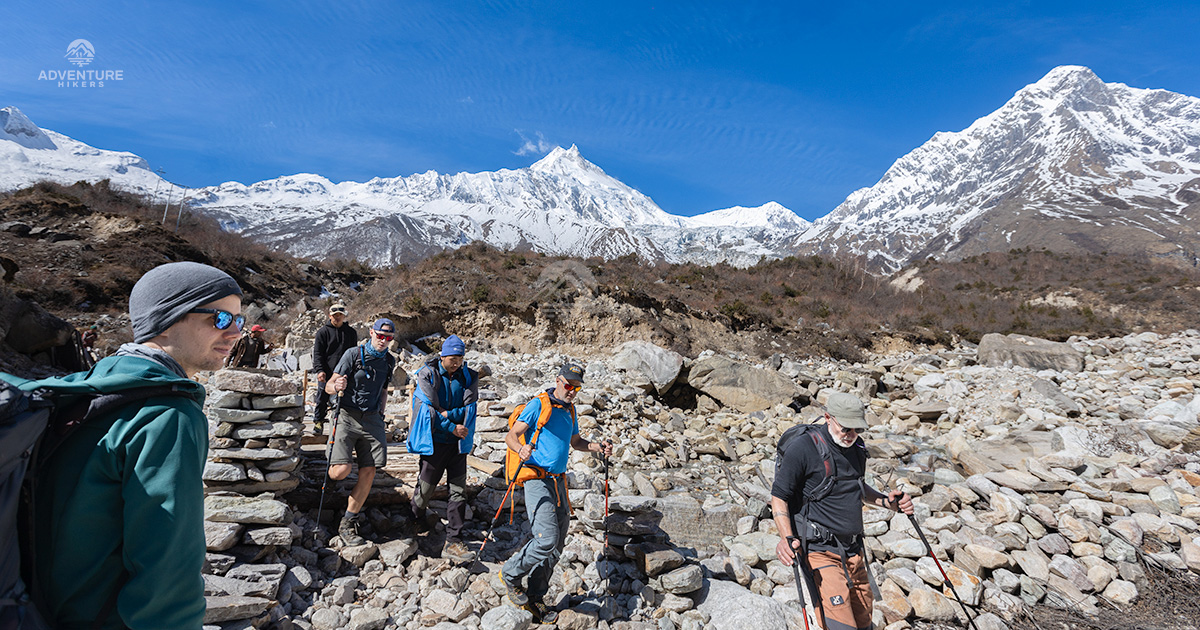
Yes, beginners can complete the Manaslu Circuit Trek, but it takes more preparation than a first-timer's trek typically requires. Here's what to weigh before booking:
- This trek is not the easiest first Himalayan trek, but it is trainable and has a moderate to challenging difficulty level.
- The mandatory guide rule actually helps the beginner, as you are never alone in the restricted areas.
- No climbing skills, no harnesses, no crampons and no previous mountain experience necessary
- Cardiovascular fitness trumps trekking experience. “Regular runners, hikers or gym-goers adapt well.
- For first-time trekkers at altitude, don’t rush the standard itinerary and build in extra acclimatization days.
- For beginners, the walking is likely to be less of an adjustment than the basic teahouse accommodation and limited amenities.
- It is strongly advised that anyone with no prior high-altitude experience first try a shorter trek, like EBC, before taking on the more remote and basic conditions of Manaslu.
How to Prepare for the Manaslu Circuit Trek
Good preparation is what turns the difficulty of the Circuit Trek from a real challenge into a manageable one. Here's how to get ready across the three areas that matter most.
Physical Training Tips
- Start training 6-8 weeks out; consistency is more important than intensity.
- 3-4 times per week Build up your cardiovascular fitness by running, cycling or swimming.
- Hike with a loaded daypack (8-10kg) on hilly terrain to simulate trail conditions
- Add stair climbing or step workouts to build strength in legs for steep ascents and descents
- Incorporate strength training, squats, lunges and core work to protect knees on long descents
- Do long practice walks (3-4 hours) on weekends to build up stamina for the consecutive trekking days
Acclimatization Schedule
- Follow the “climb high, sleep low” principle wherever the itinerary allows.
- Use the rest day at Samagaun to acclimate before heading higher.
- Drink 3-4 liters of water per day to help your body acclimate to altitude.
- At high altitudes, avoid alcohol and sleeping pills, as both may mask or worsen symptoms of AMS.
- Early symptoms of altitude sickness: headache, nausea, dizziness, anorexia
- Do not power through symptoms; report them to your guide immediately.
Packing & Gear Essentials
- The rough ground needs sturdy, well-broken-in hiking boots that give ankle support.
- A sleeping bag rated to at least -15°C for cold nights in Dharamshala and near the pass
- Layered clothing system: Moisture-wicking base layers, insulating layers, windproof outer shell
- Trekking poles to take pressure off knees on steep descents
- Basic first aid kit including medication for altitude sickness (check with your doctor first)
- Headlamp with spare batteries for early 4 AM start on pass-crossing day
Best Season to Reduce Difficulty
The season you choose has a bigger impact on the trek difficulty than most trekkers realize. Autumn, from September to November, is widely considered the best window. Skies are clear after the monsoon washes away dust and haze, giving you the full payoff of mountain views without extra effort. Temperatures are cold but stable at higher elevations, and the trail conditions around Larkya La Pass are typically dry and predictable, which lowers the risk of a weather-related delay or a difficult, icy crossing.
Spring, running from March to May, is the other strong choice. The lower trail comes alive with blooming rhododendrons, and temperatures are slightly milder than autumn, though afternoon cloud cover is a bit more common. Both seasons see fewer sudden weather shifts than winter or monsoon, which directly reduces the physical and logistical strain of the trek.
Trekking outside these windows adds real difficulty on top of what's already there. Monsoon season, from June to August, brings leech-heavy lower trails, slippery stone steps, and a higher risk of landslides on the exposed sections near Ghap, sometimes closing the trail entirely. Winter, from December to February, adds a different problem: heavy snow at Larkya La Pass can make the crossing dangerous or impassable, and freezing temperatures at Dharmasala and Samagaun push already basic accommodation to its limits.
Choosing spring or autumn for Manaslu Circuit trek doesn't remove the trek's core challenges; altitude, distance, and remoteness are still there, but it does strip away the unpredictable weather layer that turns a tough day into a genuinely risky one. For trekkers weighing when to book, season is one of the easiest variables to control, and it's worth prioritizing.
Why Trek the Manaslu Circuit with a Guide?
A guide isn't just a legal requirement here; it's one of the biggest factors in managing the Manaslu Circuit Trek difficulty safely. Here's why:
- Handles all the permit logistics, restricted area permits, MCAP, and ACAP, so you don’t have to deal with bureaucracy mid-trip.
- Recognize early signs of altitude sickness and adjust your pace or rest days as needed.
- Knows problem areas on the trail, landslide areas, icy areas near the pass and unstable bridges not obvious to first-time trekkers
- Provides a crucial safety net in an area where mobile reception is poor and rescue infrastructure is scarce
- Arranges logistics such as teahouse reservations and porter coordination so you can concentrate your energy on the walking itself
- Provides local insight and cultural context to the villages and traditions along the route that maps and guidebooks can’t replicate
- Can organize an emergency evacuation more quickly than a solo trekker could by themselves
Ready to Take on the Manaslu Circuit?
If the trail sounds like the kind of challenge you're after, Adventure Hikers runs a well-paced 13-day Manaslu Circuit Trek built around proper acclimatization, experienced local guides, and all the permits handled for you. Check out our Manaslu Circuit Trek package for the full itinerary and what's included, or get in touch with our team to customize the trip to your fitness level and travel dates.